COP30 Focus: Cities
In this, the second of our miniseries on the topics at COP30 that we should be focused on, we look at the role of cities in tackling climate change.
C40 cities is currently made up of 97 cities worldwide, representing 920 million people and 23% of the world’s economy. These cities are signed up to continuously greater ambitious action on climate change, across sector programmes, accelerators, research, finance pathways and global advocacy.
It must be critical to the continued progress of this grouping that instead of standing still, they share Leadership Standards that commit them to halve fossil fuel use by 2030; to increase resilience so that people are protected as they face the impacts of climate breakdown; and to ensure a transition to a clean green world that is fair and inclusive and addresses the injustice of climate breakdown.
You might not think that it is possible to achieve consensus on a set of climate goals like that at a time when some national governments are so out of alignment and fractious. But the Leadership Standards for C40 Cities were endorsed by:
Mayor Yvonne Aki-Sawyerr, Freetown, Sierra Leone, and C40 Co-Chair
Mayor Sadiq Khan, London, UK, and C40 Co-Chair
Minister Governor, Ibrahima Cissé Bacongo, Abidjan, Côte d’Ivoire
Mayor Kate Gallego, Phoenix, USA
Mayor Federico Gutiérrez, Medellín, Colombia
Mayor Anne Hidalgo, Paris, France
Mayor Giuseppe Sala, Milan, Italy
Mayor Oh See-hoon, Seoul, South Korea
Governing Mayor Eirik Lae Solberg, Oslo, Norway
Secretary for the Environment and Ecology Tse Chin-wan, Hong Kong, China
Governor Yuriko Koike, Tokyo, Japan
Mayor Valérie Plante, Montreal, Canada
Mayor Eduardo Paes, Rio de Janeiro, Brazil
Governor Sakaja Johnson, Nairobi, Kenya
These leaders state that 73% of their cities have already peaked their emissions; that more than 100 million people are breathing cleaner air; and that their aim is for 50 million green jobs by 2050.
As part of their C40 cities programmes:
Rio aims in 2026 to transform part of its downtown into the city’s first Low-Emission District, to start a new flood warning system, and to promote its Solário Carioca project for clean power on municipal buildings.
Freetown will continue to focus on tackling urban heat, and waste.
Phoenix, Arizona, is concentrating on protecting residents from extreme heat, through its Shade Phoenix Programme.
London’s Mayor Sir Sadiq Khan says that “London has made strides in cleaning up its air. Now its cleaning up its rivers. In 2026, London will launch its Clean and Healthy Waterways Plan, a world-first, 10-year strategy to clean all 41 of London’s rivers by 2036.”
Perhaps this was partly prompted by the success of Paris in cleaning up the Seine for swimmers in time for the Olympic Games? Other cities are taking account of that, and this element of spurring each other on, and sharing know-how on a Knowledge Hub with 28,000 other cities may be one part of C40 cities’ success.
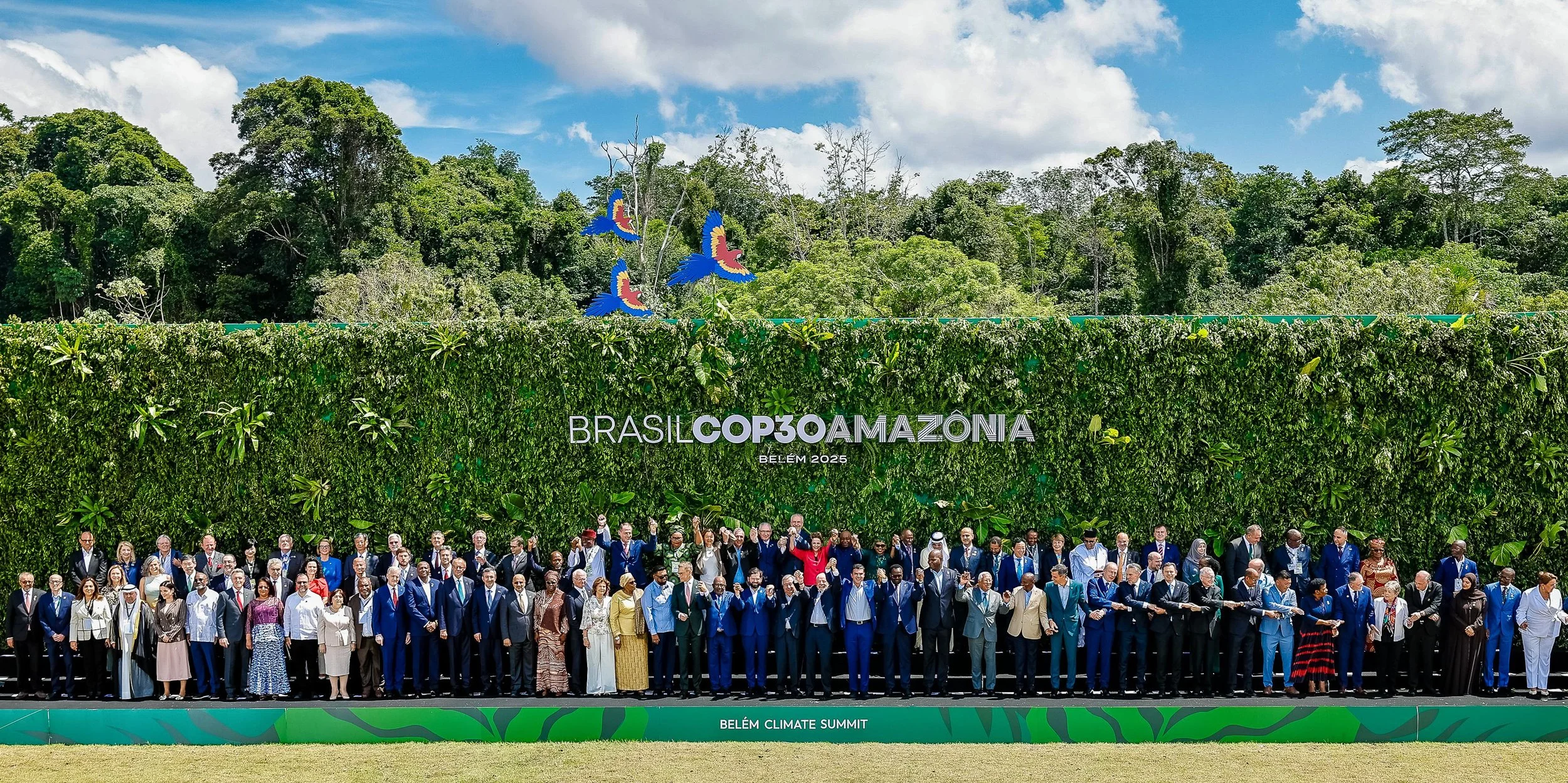
The forward plans of these leading cities are a powerful reminder that not all progress comes ‘top down’ from national governments.
Nationally Determined Contributions that are worked out by national governments without taking full account of cities’ actions and potential are not the last word on what is achievable. These cities are not waiting for national governments to tell them to take action on climate change. Nor are the subnational governments represented in the Local Leaders Forum convened in Rio by Bloomberg Philanthropies.
Philip Yang, COP 30 Special Envoy for Urban Solutions warns that the cost of climate action in cities is high, but the price of inaction is greater. He proposes establishing a formal arrangement between the UNFCCC and UN-Habitat; creating a subnational financing window supported by a catalytic project-preparation fund; and deepening the integration of the urban agenda into COP decision-making. As he sees it:
“The bottleneck lies at the start of the pipeline: without studies, permits, and engineering, there is no public or private decision-making. The fund fills this market and government failure, structures and bankable pipeline, and attracts banks and private capital”.
He gives these examples of climate actions being taken by major cities:
“…Curitiba uses wetlands parks to absorb floodwaters. São Paolo combines retention reservoirs with linear parks along micro-basins. Rio di Janeiro operates real-time rainfall alerts. Medellin reduced heat islands with green corridors. Rotterdam created ‘water squares’ that double as retention basins during heavy rain. Copenhagen redesigned its streets to safely channel stormwater…”
Philip Yang is looking for COP30 to take a lead in promoting effective climate actions at the city level:
“If that turning point happened, Belém will be remembered not only as the ‘COP of the forest’ but also as the ‘COP of Cities’ – cities with less flooding, less extreme heat, more green jobs, and the foundations of a new, sustainable economy.”