
Climate Change Made Simple
In some ways, Climate change is not that complicated.
Lets park our political views at the door for a little bit, and be prepared to believe both the science, and the evidence of our own eyes. You could start by visiting your local glacier. If there is not a glacier readily to hand, we can help. The Borrowed Earth Project on tour went to visit the Hopper Glacier in Gilgit-Baltistan, Pakistan on your behalf.
We stationed a passing environmental and climate lawyer in front of the glacier, and made him wear a white Peshwari shawl (the kind gift of Nouman Alam and his brilliant Climate Class Connection) to contrast with the debris-strewn, blackened surface of the glacier, which must retain more heat and further accelerate its melting.
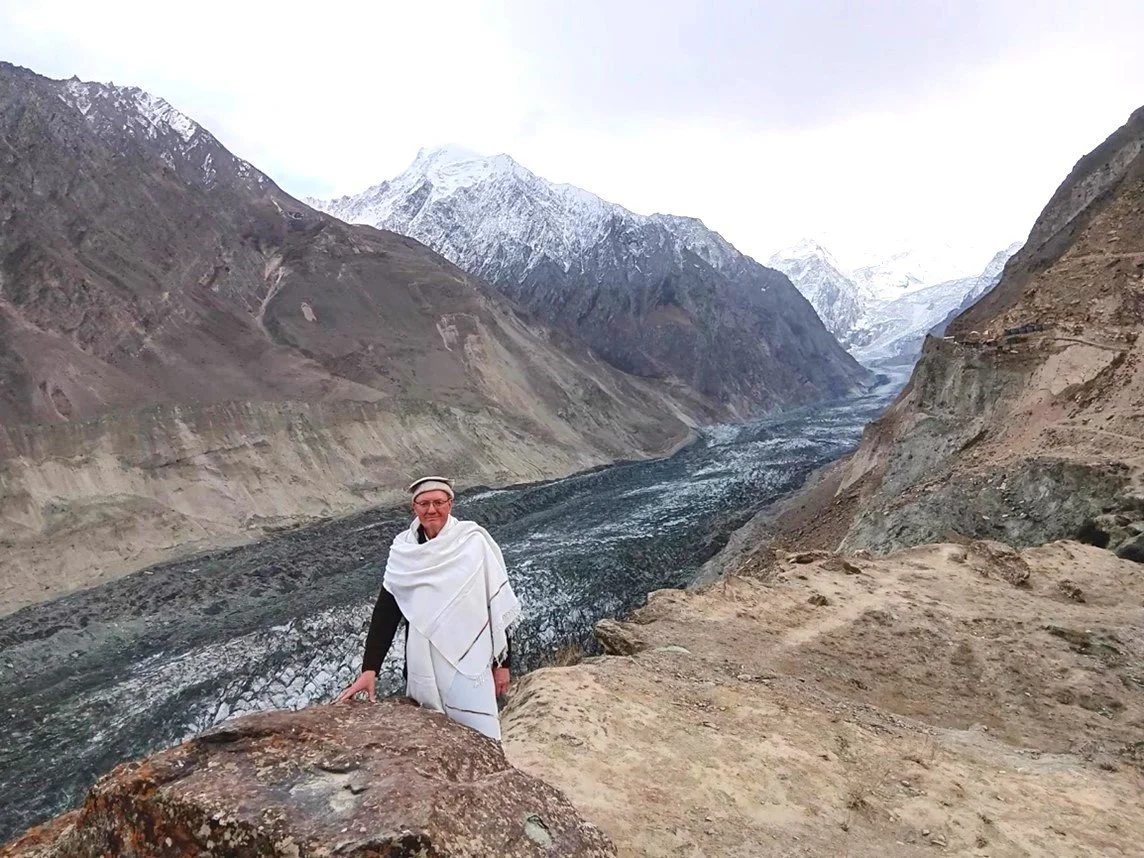
All glaciers worldwide are melting much faster than at any time in human history, as a direct result of global warming. We have documented how they are retreating and the ice melting in our recent article here that has links to more expert sources of information.
When rapid glacial melting meets with heatwaves and the more violent and intense monsoon rains, you can get flooding which affects the whole county, like the devastating 2022 floods which left a third of Pakistan under water, as seen in our short film Climate Carnage in Pakistan.
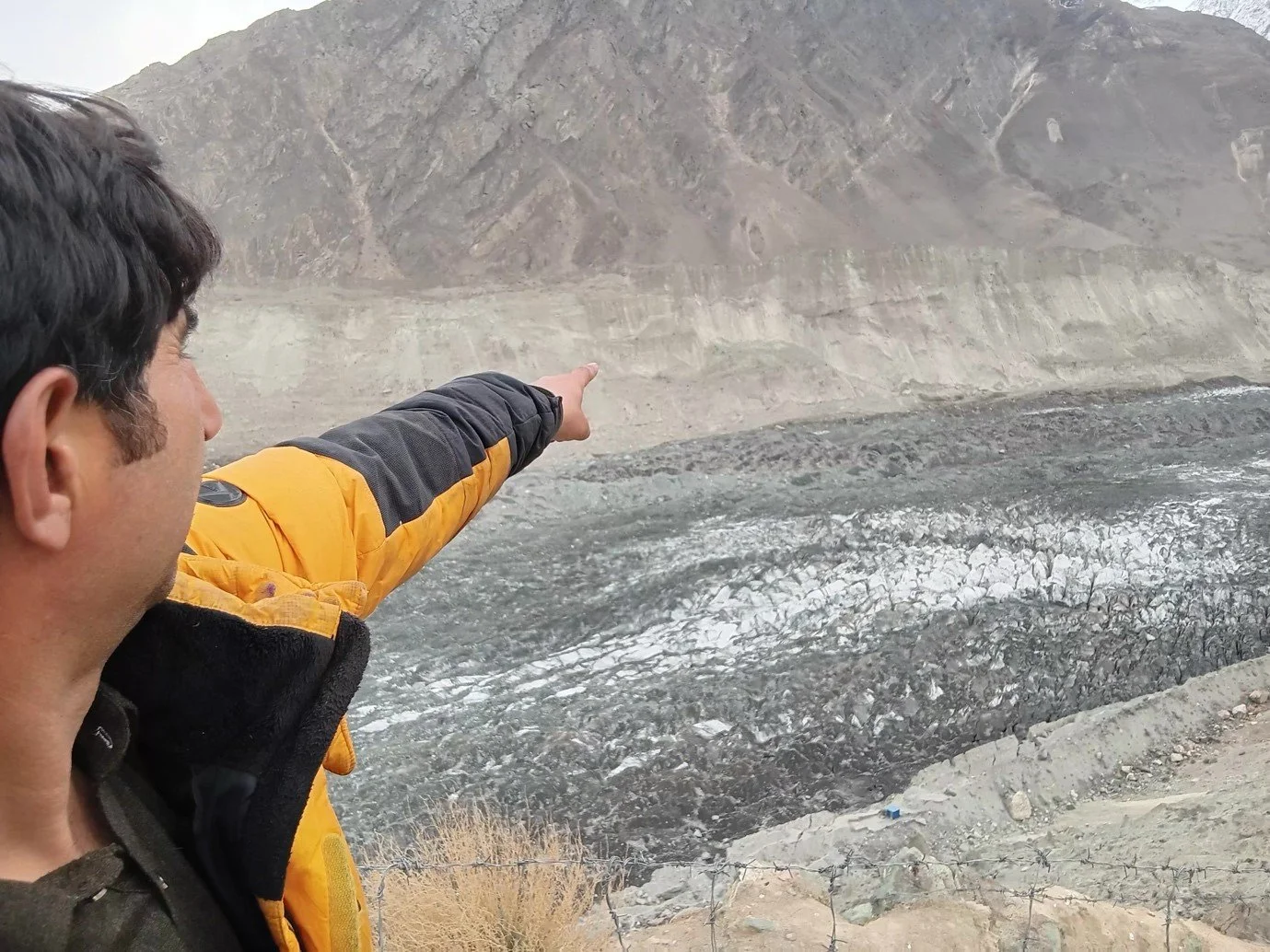
We asked a local, Mohammad Yasin to show us where the glacier ice was in his grandfather’s lifetime…
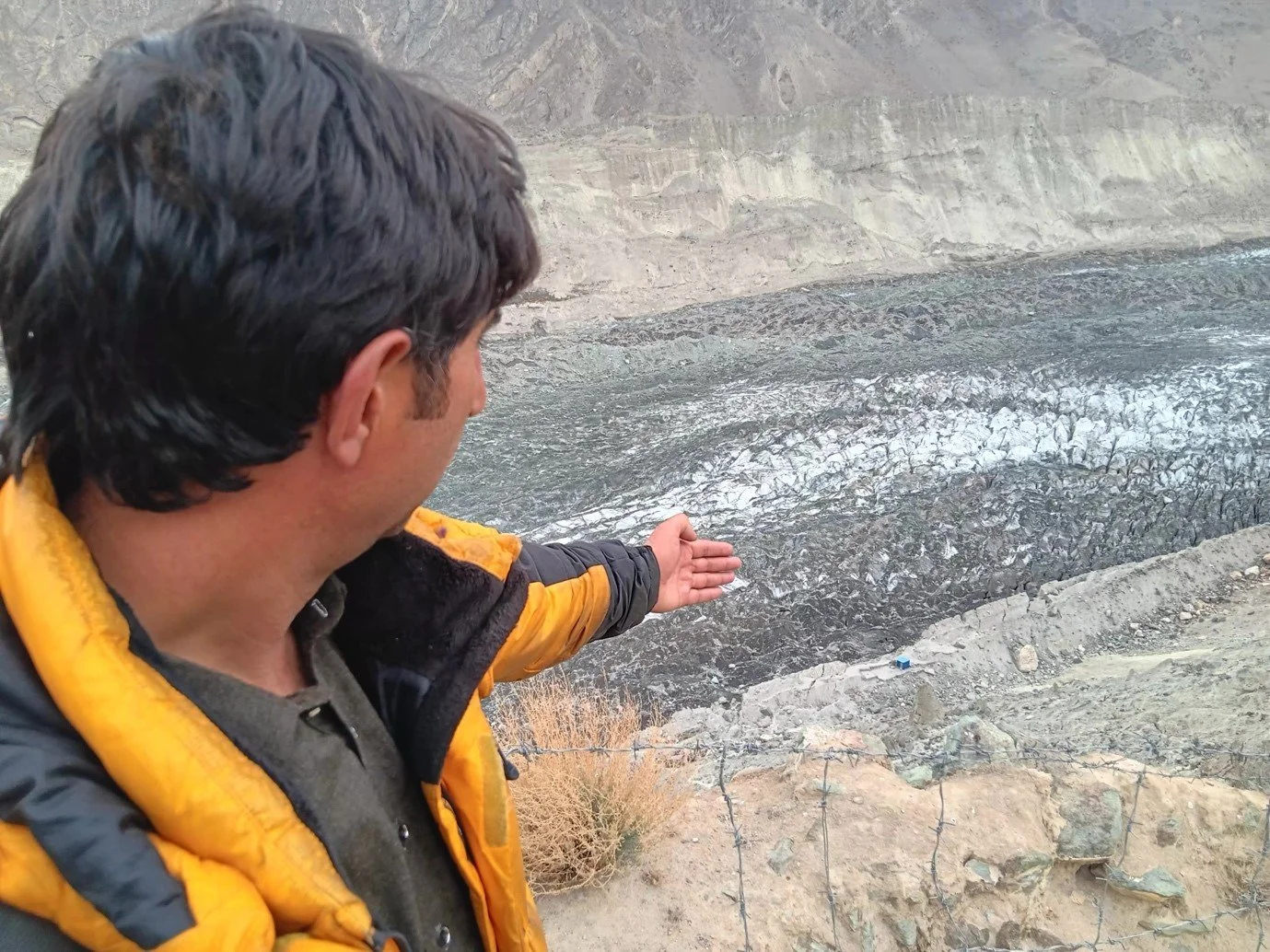
…and where he first remembers it.
And he told us that the level of the top surface of the glacier had gone down by 100 feet in the last 10 years.
Other local people told us that recent summers had been between 6oC and 7oC hotter than normal. Think of what that would do to the ice in a glass. Then think about what it can do to a glacier. Then in Pakistan’s case, multiply that by the 7,200 glaciers in the country.
This glacier melting has really big impacts and implications both locally and nationally. In the mountain areas unstable rock surfaces, glacier lake outburst floods, other flash floods and landslides cause devastation.
Here are some pictures of the little town of Gulmit where this flood in summer 2025 came straight through the Bozlanj café. If this happened to you, or your home or business, you might not spend a lot of time wondering if climate change is real. More and more communities around the world understand perfectly well that it is happening right now and affects them directly.
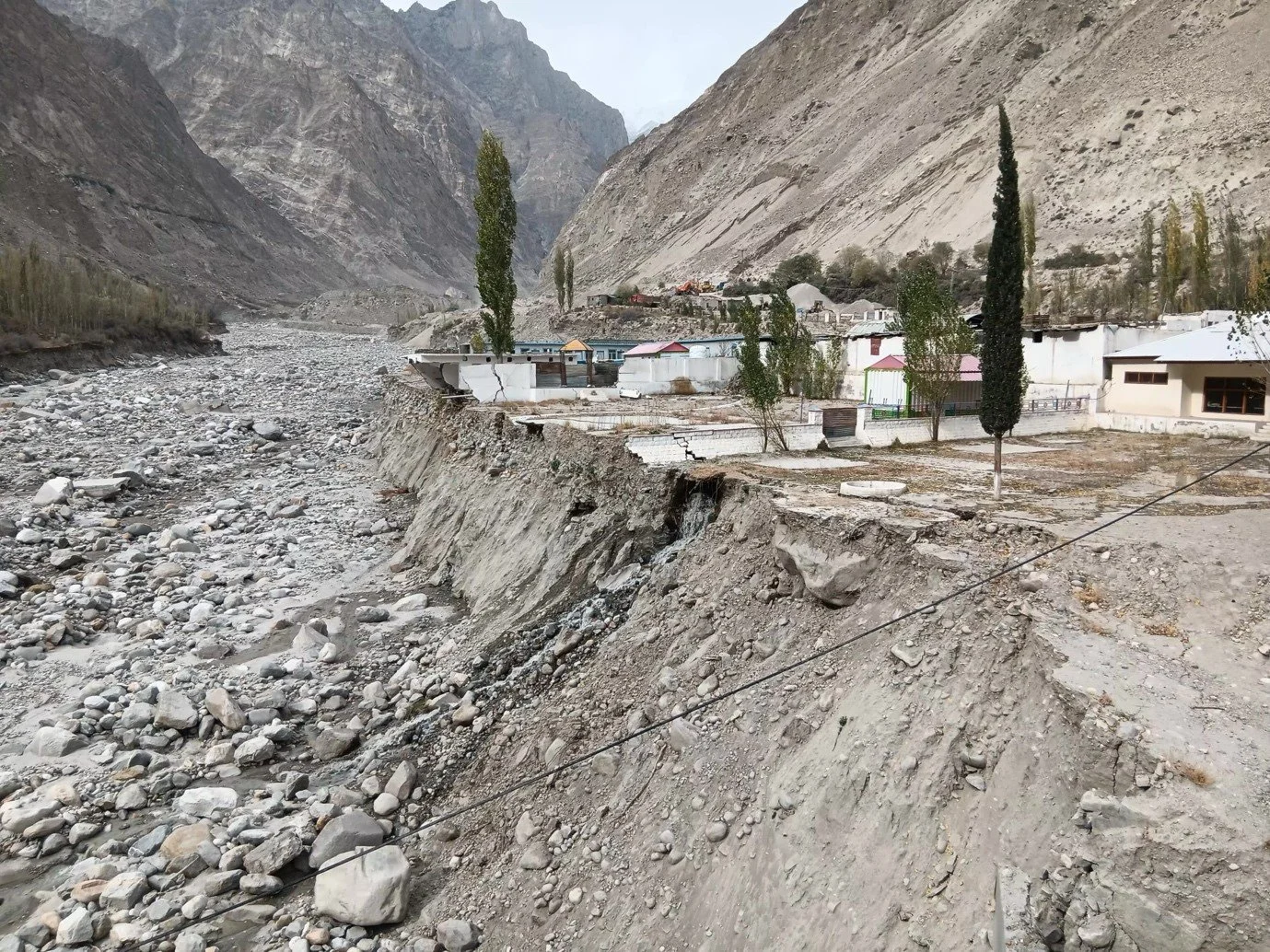
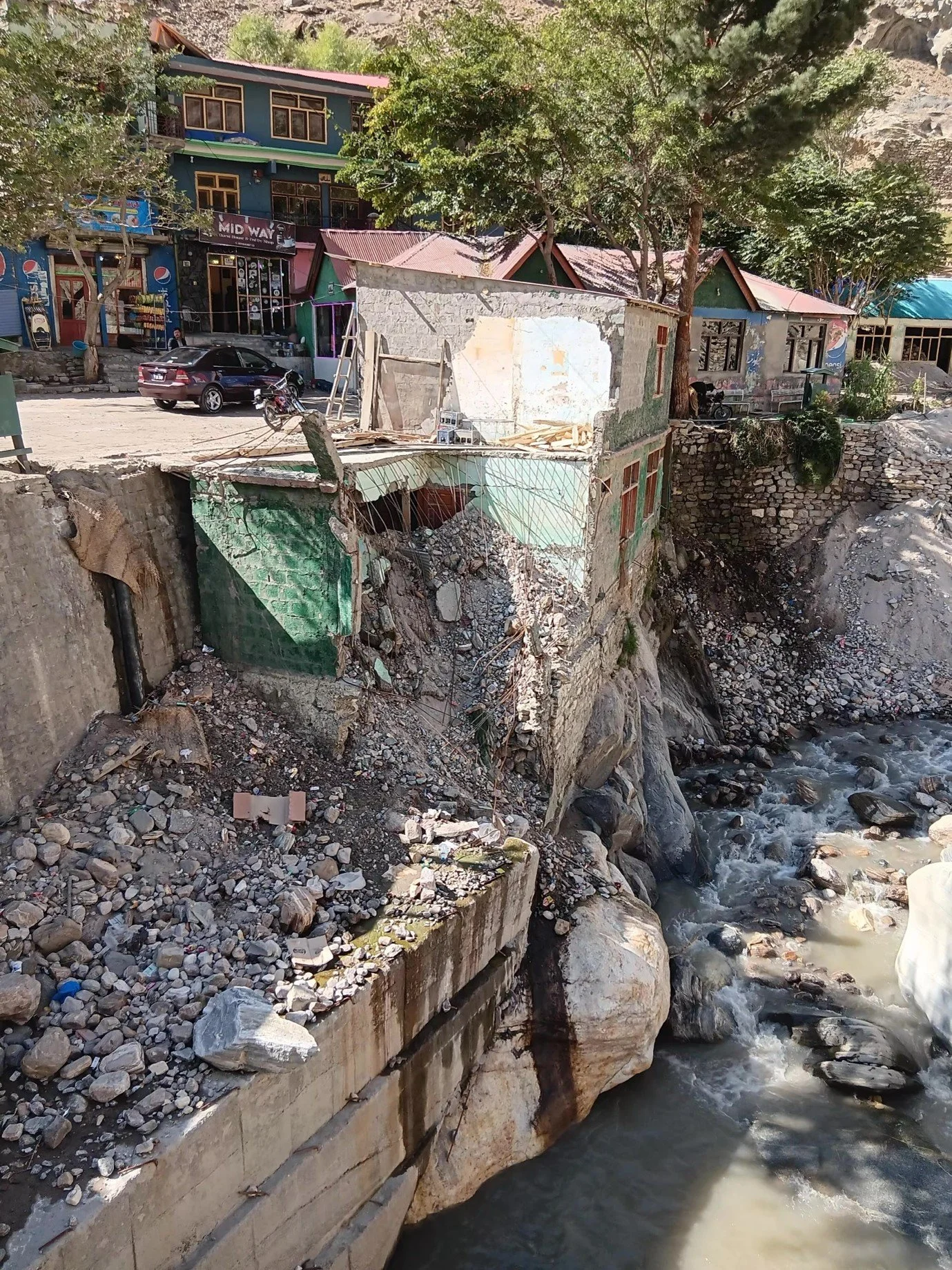
These flash floods and landslides also cause huge damage to water channels, bridges, roads and other infrastructure.
And water is key. Many of the high mountain valleys in the Karakoram, Himalayas and Hindu Kush are basically rocky desert, and in some, like Hunza, brilliant famers have built terraces and small fields in which they grow the best apples, apricots, mulberries, walnuts in Pakistan.
The rivers from this region water the plains of the Punjab, Khyber Paktunkhwa and Sindh. The United Nations World Water Development Report 2025: Mountains and glaciers – Water Towers says that up to 2 billion people depend upon glacier fed rivers. The report says that the Hindu Kush-Karakoram-Himalayan system could lose half of its glacier volume (currently 100,000 km2) by 2100. A local event like the loss of a house or a café can be part of a worldwide issue with huge implications.
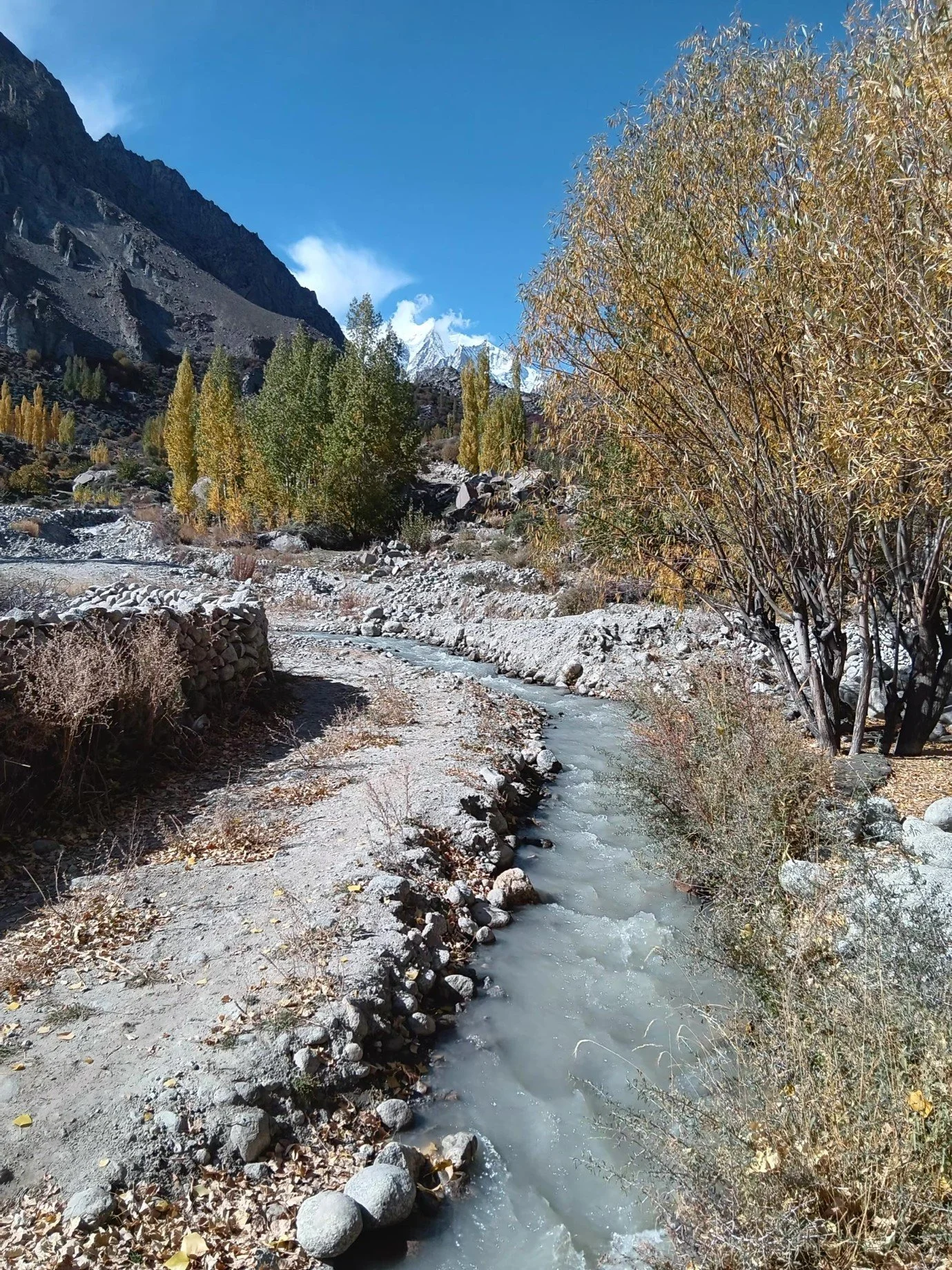
It all depends on water, and once the glaciers have gone, what does the future hold?
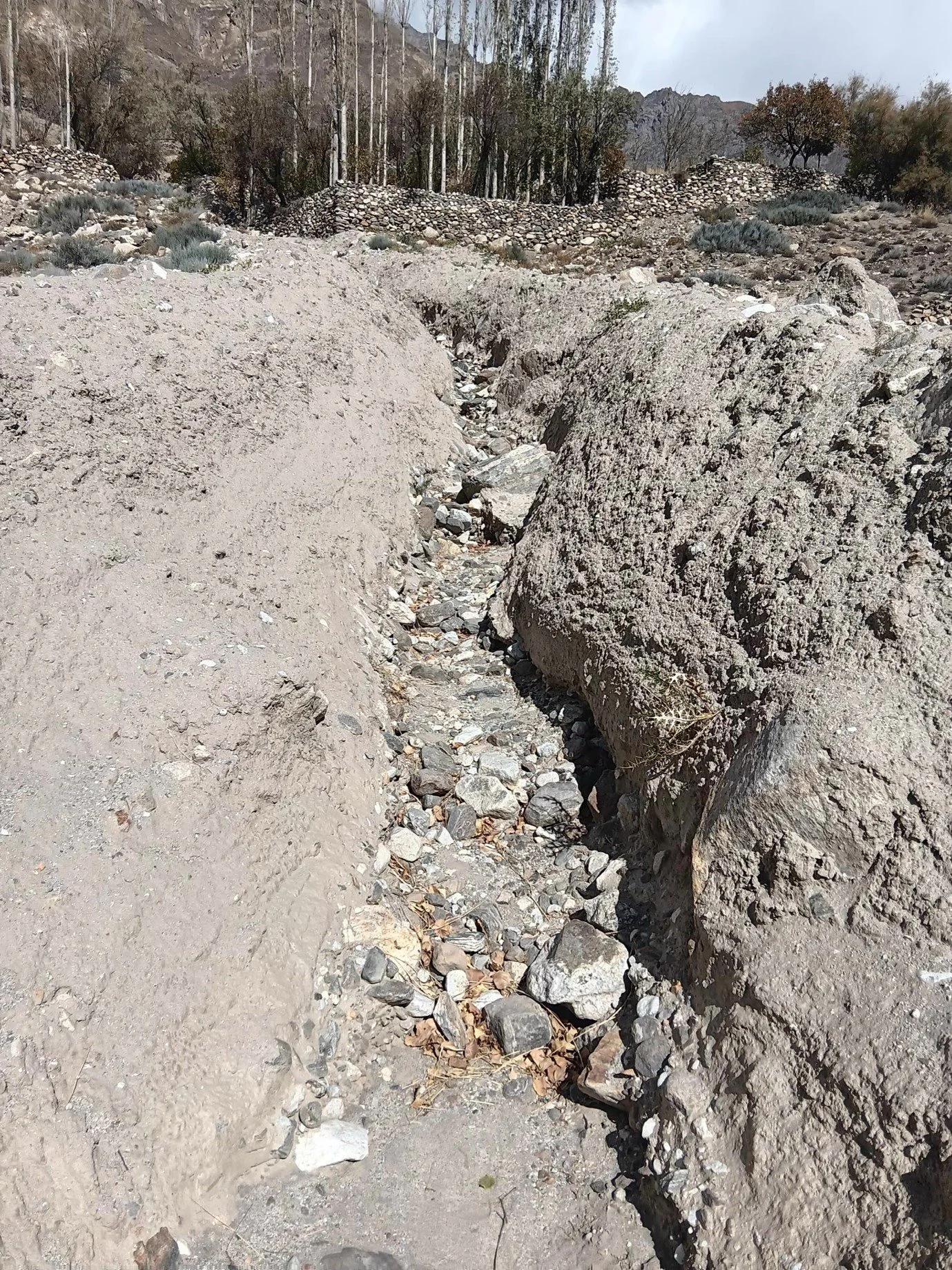
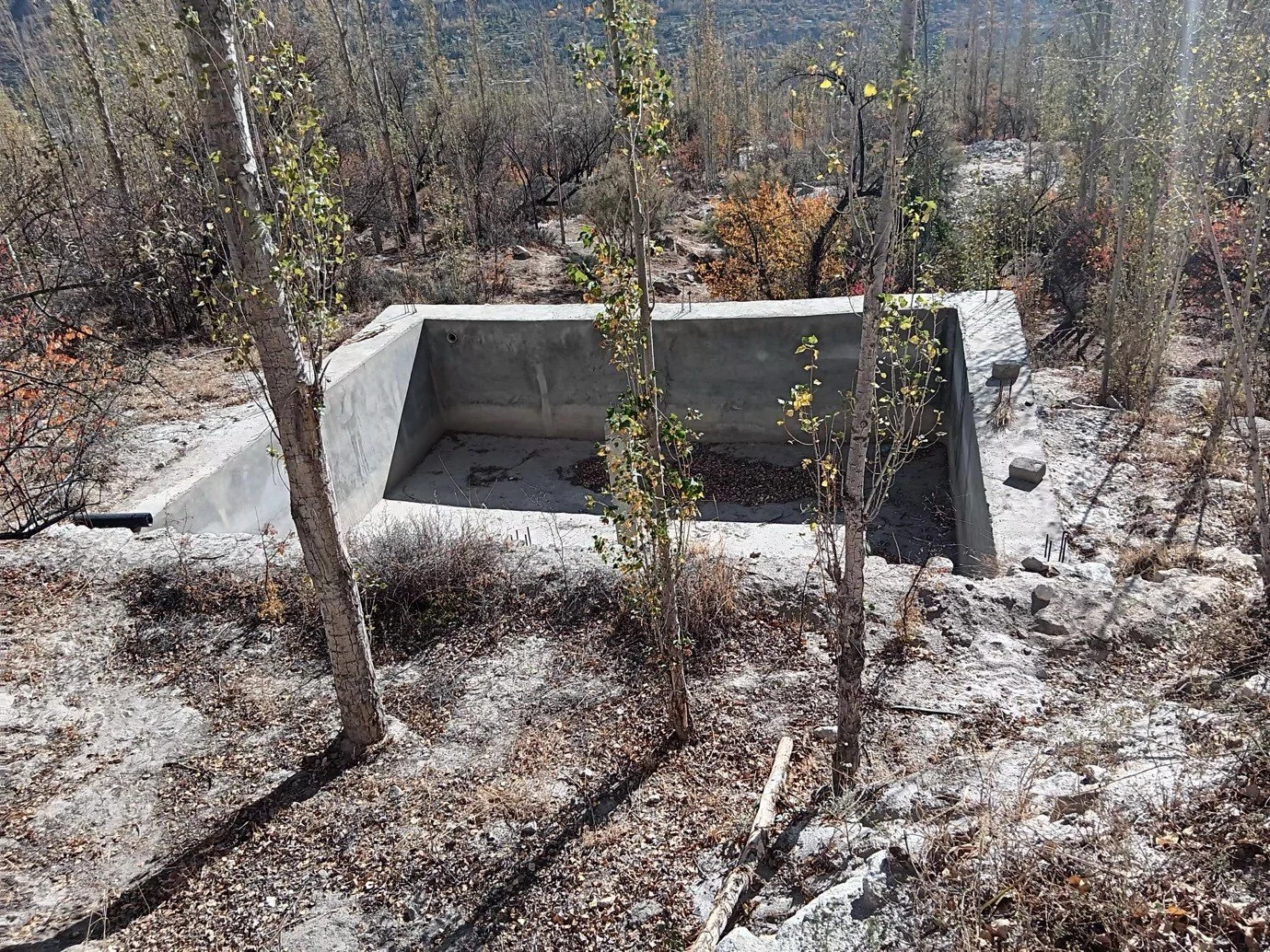
There is an urgent need to think ahead about the best and most effective ways to store water or use it more effectively. And perhaps no time at all to waste debating whether climate change is real or whether the scientists are making it all up.
One great hope that this area has is its education.
Seeing and hearing classes of girls and boys tumbling out of school in Hunza would give anyone hope for the future. And fine young climate leaders like Nouman Alam, Riaz Ahmed, Ehsam Ullah Baig are not sitting around waiting for more climate change to happen to them and their communities. They are using all their energies to contribute to solutions. We hope that you will too – the problem is big enough to need any number of brains working on it - and that is the kind of work that The Borrowed Earth Project was set up to support.