
An interview with Lt. General Russel Honoré
He led the response to Katrina, now he is an environmental advocate.
On the 29th August 2005, Hurricane Katrina made landfall in Louisiana. The costliest hurricane in US history, the storm took 1400 lives, caused $125bn in damages, burst levees, left much of downtown New Orleans underwater, and forever changed that city and state. The response of officials, from the Mayor, the Governor, the FEMA Director, and up to President George W Bush was roundly criticised.

Among those who responded to the disaster, one of the only people to emerge with a burnished reputation was US Army Lieutenant General Russel Honoré, a native of Louisiana, who was tapped to lead the Department of Defence and FEMA Joint Task Force that responded to the storm. He became famous after the Mayor of New Orleans said, “I give the president credit on this, he sent one John Wayne dude down here that can get stuff done”, after telling a reporter “don’t get stuck on stupid”, and after he was filmed patrolling the streets yelling at National Guard troops and police to “put those damn weapons down”.
The straight-talking General nicknamed “The Ragin’ Cajun” retired in 2008, and took up environmental advocacy.
His work with his advocacy group The GreenArmy was featured on Spike Lee’s Katrina: Come Hell or High Water documentary - released on Netflix to mark 20 years since the hurricane .
We are grateful to the General for kindly agreeing to this interview.
Edward Wilson - The Borrowed Earth Project. So the first question I want to ask is for people who are maybe a little bit young to remember Katrina, we're marking 20 years, in August, since the hurricane. What was your role during the response within the Joint Task Force? How did that come about, and how did that Joint Task Force fit in with the state and local response to the disaster?
Lieutenant General (ret) Russel Honoré. I was commanding 1st Army at the time in Atlanta, and we had a mission to provide military support to civil authorities east of the Mississippi River, which included Mississippii - where the storm (was due to make) landfall. So we started preparing the week before, in the event we would have to be deployed to Mississippi.
Then, as the storm made landfall (Monday 29th August), on Tuesday (30th August 2005), I self-deployed to Camp Shelby, Mississippi where we were training National Guard troops to go to Iraq.
And from there, by Tuesday night, when my boss knew I was in Mississippi, he told me to go on to New Orleans, because the general that was supposed to do Mississippi & New Orleans was still in San Antonio.
So, since I was the closest, I became the task force commander.
And we deployed 20 Navy ships, over 200 helicopters, and about 20,000 federal troops, to respond to Katrina, and the rest of it you saw it unfold on television. There was a lot of criticism, about the slow response of FEMA, but we did what we call a contingency mission to go in when asked, or when told, to assist in the evacuation in New Orleans, and we were there for 6 weeks.
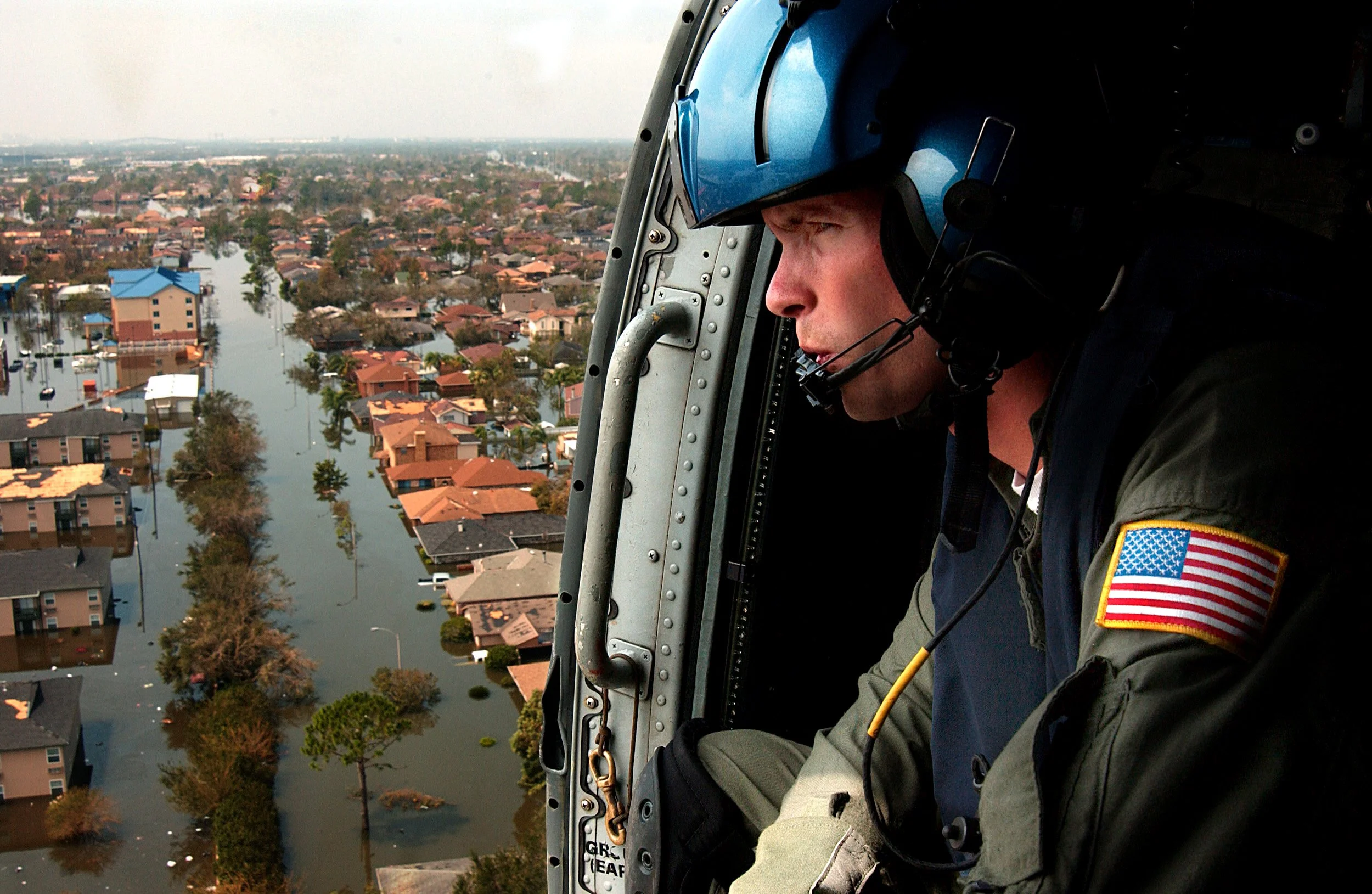
Coast Guard survey New Orleans after Katrina
You mentioned the lessons from Katrina. Looking back now that it has been 20 years - do you think the main lessons have been learned? I'm sure there were lots of reports written afterwards about what should have been done, what we should do better.
As you think about the potential for more storms in the future from climate change, do you think those lessons have been learned on how to respond?
Well, yeah, a lot of them were learned, they were recorded, they were investigated, when you spend $114 billion, people wanted to know answers.
At the end of the day, Mother Nature can break anything built by man.
But what we did come to discover is, starting from the environment side, is that Louisiana has lost a lot of its wetlands, which were a protective zone when hurricanes came.
When the wetlands were alive and well they would reduce the threat of the hurricane quickly, but we've lost so much of our wetlands and our coastline, we no longer have that buffer between the Gulf and the city of New Orleans and the coast of Mississippi, because of the deterioration of the wetlands. So, we don't have that natural protection, that we used to have, because the wetlands are gone.
The other thing came about (was)…, the heat in the Gulf at the time was the highest it had been that year. And that's a reflection of global warming, which is a tribute to man-made pollution that's causing global warming, primarily from methane and other greenhouse gases that are going into the atmosphere from the petrochemical industry.
And Louisiana is the third largest petrochemical producer, as well as the leading liquified natural gas producer, which is the largest producer of methane, which is the biggest driver of global warming, which heats up the ocean. So, we had that factor going on.
And then on the infrastructure side. Our levees had become deteriorated from absence of upgrades and work.
So when the storm came, it got into the coast of Louisiana, and it turned toward Mississippi. It pushed the water inside the Lake Pontchartrain, the Lake Borgne, and then it pushed it into the drainage canals in places like the 17th Street Canal.
And the industrial canal broke, because it wasn't designed to be able to deal with surge water. They were designed to take the water out of the city which is in a depression, it's like a bowl. Pump the water out from rainwater, but in this case the surge water came in from the river to the lake and into the city.
So, that's how the city's flooded.
Over 240,000 homes flooded and we ended up with a situation where we had about 80,000 people that did not evacuate that we had to evacuate from the city. So we had infrastructure problems as well as the challenge from Mother Nature - because, again, anything built by man can be destroyed by Mother Nature - But (also) by all (the) actions of man, the weakening of our coasts because of the exploration industry that weakened our wetlands with saltwater intrusion from oil explorations, and decades of doing that.
Our levies were old. The pumps in the city were not adequately upgraded. They had pumps pumping water out of the city that were built in the 1930s and 40s. Old technologies.
So, it was a combination of, what you might say; the perfect storm against bad infrastructure.
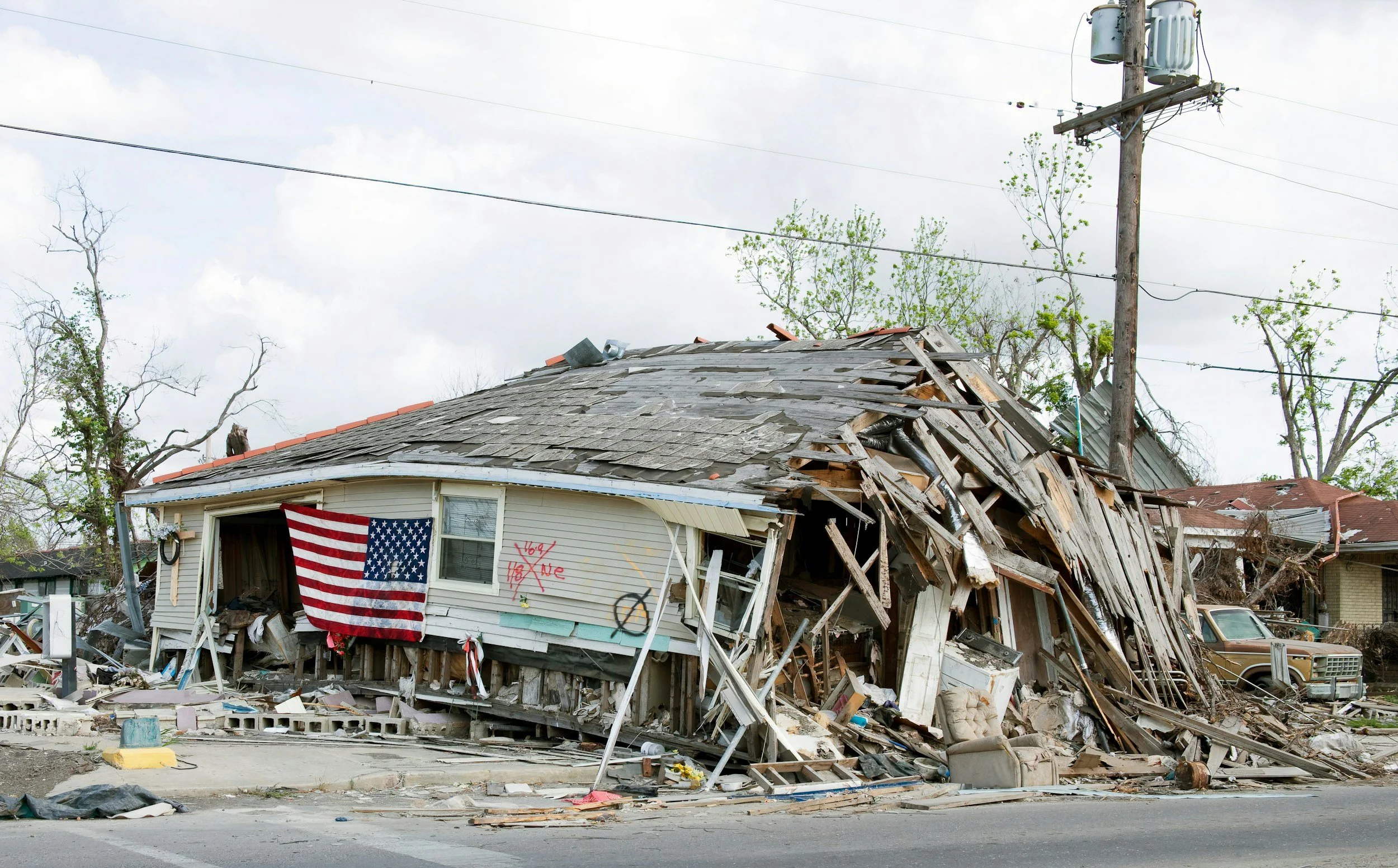
Devastation after Katrina
I believe infrastructure upgrades in New Orleans will have been one of the focuses of the recovery effort . Do you think there's been much natural restoration of things like wetlands in Louisiana, or on the coast in general?
Well, there's an attempt to upgrade the wetlands, but the governor just stopped a recent project That would have connected the river to the wetlands. It was a $3 billion project and there was some pushback from the local fishermen and the governor has agreed with that, and they've stopped that federal money - $3.2 billion, I think - that was going to restore wetlands.
But the way they were going to do it was running fresh water out of the Mississippi River to channels which would take the sediment from the Mississippi. Because the Mississippi is currently bringing sediment from up North from 31 states and dumping (in) it.
But the governor stopped that project, so I'm not sure what we're gonna do now.
Interesting. Thank you. So in your own experience, before Katrina, you'd served in the Army since the 70s, obviously the National Guard prepare for disasters. Had you been involved in any disaster relief efforts, yourself, maybe serving overseas?
Yeah I dealt with disasters overseas. From the Pentagon, I responded to floods in Africa, Mozambique, responded to hurricanes off the coast of the Carolinas, and hurricanes in Central America and Colombia, all those from the Pentagon.
And, so I've had experience in dealing with natural disasters, yes, before Katrina.
And, when I was in Korea, we had to defend against monsoons every year. As a division commander of 20,000 troops in Korea along the demilitarized zone.
Korea has a monsoon season that comes around over the summer, and it goes on for 30 to 45 days with heavy, heavy rains. And you learn appreciation for flooding because 60% of Korea is mountains, so when it rains, the water goes to the low areas, and you have to constantly maintain your drainage ditches, and you got to constantly evacuate people.
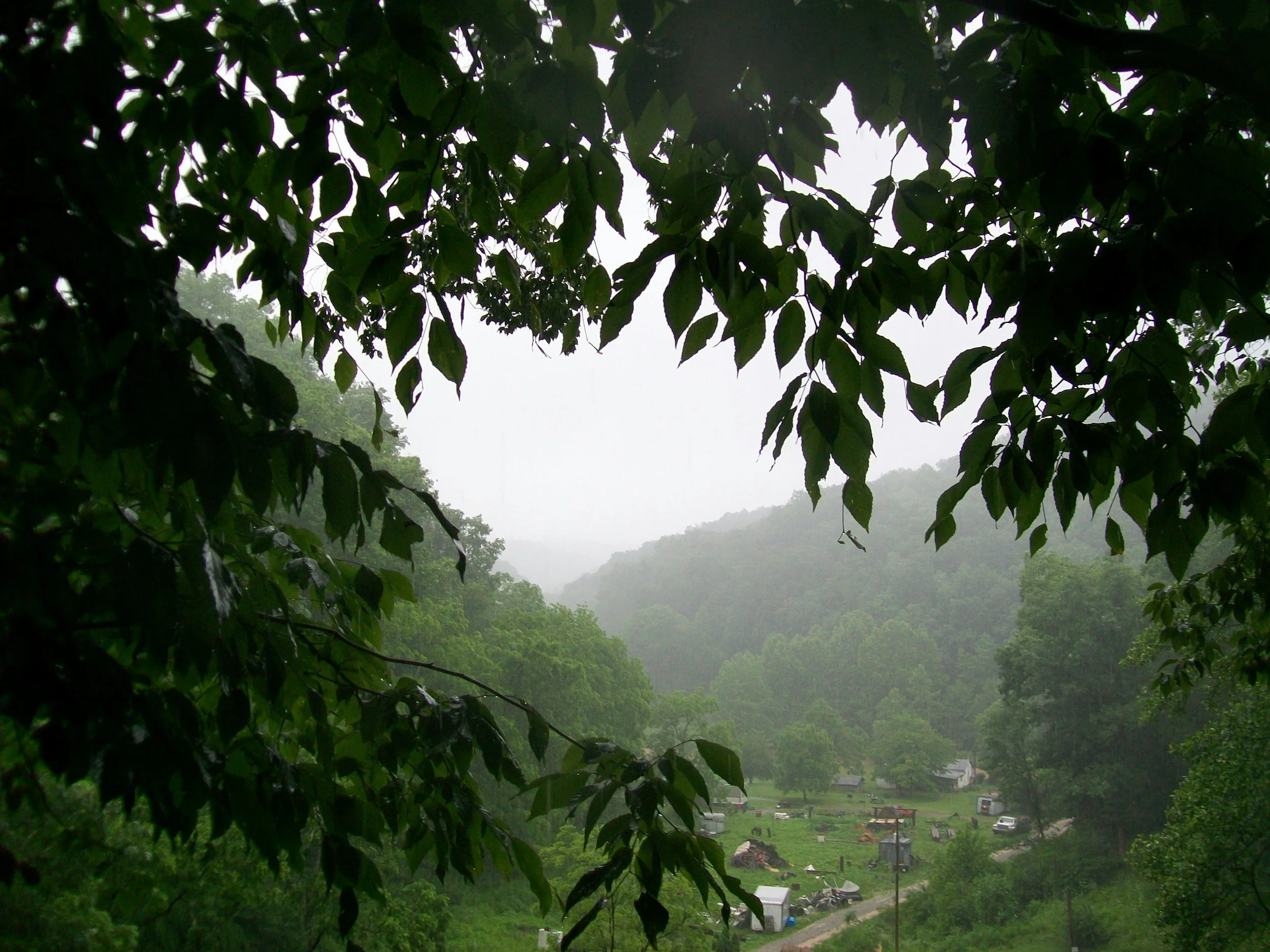
Korea during Monsoon season
So, do you think people who live in places like that around the world that see, more consistent natural conditions like that are better at setting up their infrastructure in a way to be able to be a bit more resilient?
Do you think there are lessons to learn from places that receive more rainfall like that for other spots that could see flooding in the future that aren't used to it now?
Yeah, well, sometimes yes, and sometimes no. The place could flood this year, the next year you go, and they build new houses there.
So, no, people are generally stupid, and driven by capitalistic endeavors.
We got it happening right here in Louisiana. We've got areas that flooded in 2016 and they have four foot of water, you go there now, there's a subdivision there. So we're pretty basically stupid.
I was thinking of North Carolina that had Hurricane Helene in 2024, and areas that hadn't seen much flooding suddenly got very disastrous flooding and weren't used to it?
This week, we had a storm come close to the Carolina coast and it dropped, what, a couple dozen houses?
Why do we keep building the f****** houses on the coast?
Now they're gonna want insurance, so they're gonna want FEMA to rebuild their house. Some of those houses have been rebuilt 5 or 6 times.
One interesting development happening is, you are seeing insurance companies just not insuring in entire states, like Florida and California.
They are backing off, and it's going to end up being the states or the federal government that are going to have to pick up the insurance tab. The private market is walking away, they can see the writing on the wall.
Can you explain a little bit about your involvement after retirement with the GreenARMY? How did that come about, and what kind of work do you do with them?
Yeah, well, I moved back to Louisiana after being gone for 40 years and there was a man-made disaster in one of the Parishes, in a village called Bayou Corne.
And an industrial company had gone to Bayou Corne, which sits on top of a salt dome, and they did some exploration which broke the dome and caused subsidence, and caused the people there to have to move.
And I have been watching this on television, and the people called me and said, hey, we need your voice, we need your ‘Katrina’ voice to come help us, because the government ain't doing anything.
So we went in and helped them. I brought some national media there. Did a couple news conferences there with some national and international media. It was during the Obama administration, they were all “see nothing know nothing - it's the state’s responsibility”.
And come to find out, all these people had to move, they lost their homes. It was a mess, and the company walked away, because the whole government is set up to support the fossil fuel industry, because they were in the business of storing fossil fuels in the salt dome. But it broke that salt dome, and a salt dome is like a big egg underneath the ground filled with brine. They took the brine out, they would put gases, propane, and others in there, and store it until they can ship it out. And there was a company out of Texas, but they got off, because that's the way the government supports the fossil fuel industry. That's the way it works. Unfortunately.
Especially in Louisiana - I mean, I've been down, I've cycled down ‘Cancer Alley’ from Baton Rouge down to the New Orleans, you can see all the refineries and plants on the water there.
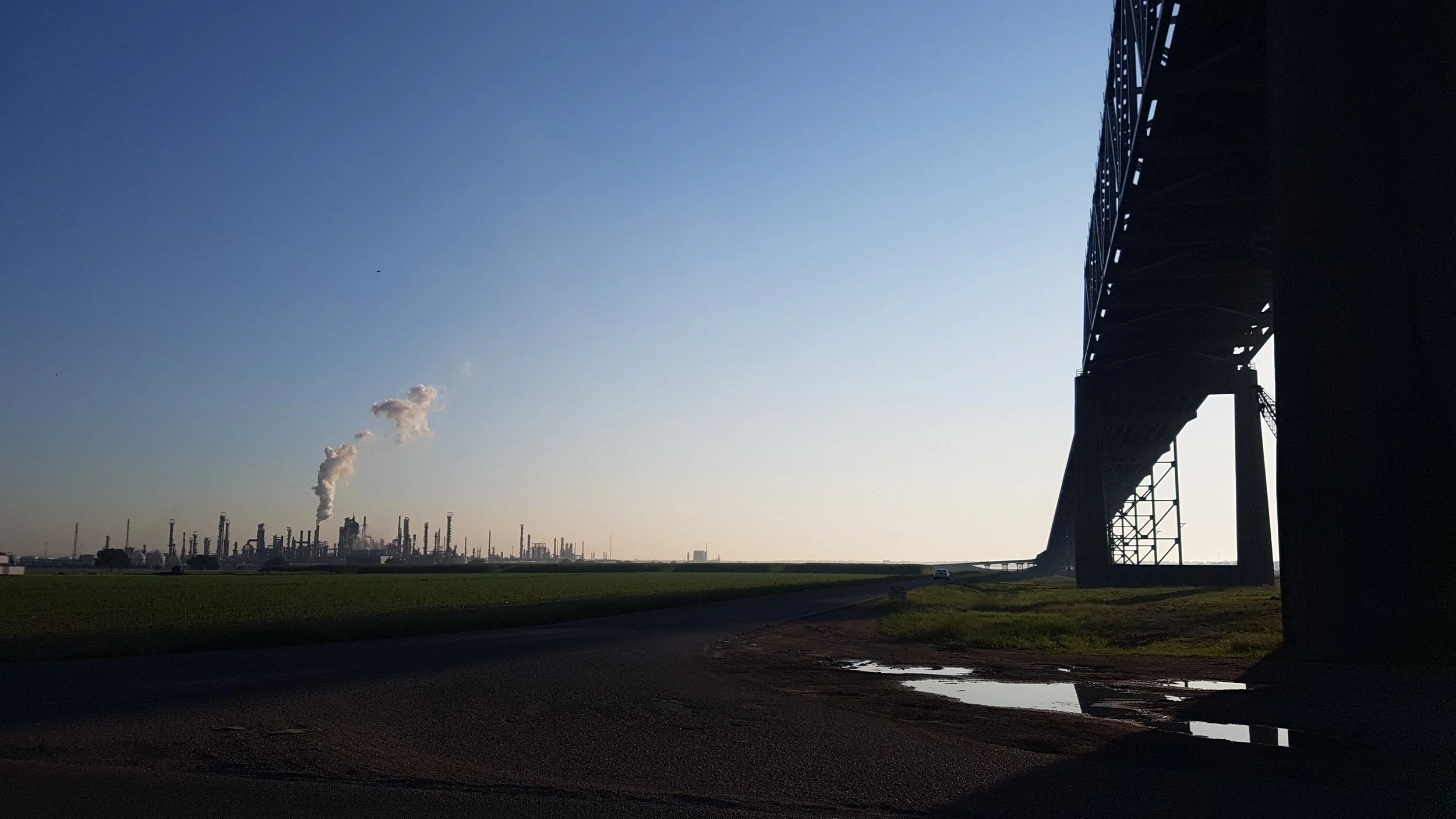
“Cancer Alley” - A view of an Air Products Chemical plant near Sunshine Bridge, which crosses the Mississippi near Union Louisiana. Taken by Ed Wilson in September - 2018.
What are some of the other issues that you've worked on with GreenARMY? Are they mainly water-quality related?
We work with communities in Louisiana, we've got 1,200 separate water systems, and 400 of them are at risk. We got people in Louisiana that actually drink brown water.
Because, the water pipes and the water purification systems are not adequate, and they tell the people “don't worry about it, there’s magnesium and iron in the water, and it won't hurt you”. But people know better, so they're really literally buying water in Louisiana to drink - the ones that can afford it. And we've worked with those communities.
We've worked to try to save two aquifers, the Southern Hill Aquifer and the Chicot Aquifer but we lost ground this past year because this administration and the legislature passed a bill to eliminate the Capital Area Groundwater Commission which was designed to extend the life of the Southern Hill Aquifer that serves five parishes.
But the legislature got rid of that Commission this year, because the Commission had been suing the local water company to ensure that they put proper well gauges in, and the company didn't want to do it, so they got the legislature to get rid of the Commission, which was a citizen drawn community-funded committee that helps supervise the preservation of the aquifer. So it will be left up to a state agency to oversee what happens with the aquifer, the local people have lost (their) voice now.
In my estimate, the water company will do just what the hell they want.
It sounds like the people in that area are pushing for more and more strict environmental controls, and it's just coming up against lobbying and vested interests influencing the legislature.
So, your organization is trying to lend a voice to those people, and try and amplify their concerns?
Yeah, well, we just had a call, we have one every Friday morning, we had about 30 people on it, people from various communities, and NGOs that have committed to help save our environment and our water and our air, we just got off that call to get an assessment of what's going on in the community.
So we're working now, I'm about to stop in a town called Roseland, Louisiana, where a month and a half ago there was an explosion at an oil manufacturing plant that caused thousands of people to evacuate because the plant caught on fire.
It took them days to put the fire out (and there was) runoff from that plant, which had millions of gallons of various types of fluids that contained a lot of heavy metal.
So, after, 4 days, the State asked the (Environmental Protection Agency) EPA to take over the response. Then the EPA sent a pretty junior team in, and they’ve been doing a pretty half-assed operation. It should have been a national response, like (the BP Deepwater Horizon disaster) and they've tried to handle it inside this EPA district.
Now, we could have oil and heavy metals in Lake Pontchartrain as we speak, because we saw a sheen from it, we reported it to the state, and they put in an extra barrier, but we’re pretty sure from pictures we took yesterday that it's heavy oil and dioxins in Lake Pontchartrain, which is the Pearl of the South, it’s a beautiful big lake, one of the biggest in the South.
That is the Roseland-Smitty explosion. I'll put a link to some news articles on that so people can see and follow up on it.
It sounds like your organization and people who are helping you are doing quite a lot of the monitoring and citizen science & research. You’re saying folks are taking pictures and monitoring this. Is that because there's a lack of any kind of official monitoring system going on for these areas?
Well, you know, if you ask the EPA, they'll tell you they're doing the best job in the world, but we know they have done a very slow job of cleaning up. They've only tested what you can see around the plant. But they haven't gone into private properties that have ponds, people that have gardens, some of the animals have died.
They are defending that they did everything they could. And for weeks, the EPA knew there were more elements that people have been exposed to, but they refuse to issue (information on which elements) to the public because it might violate the (privacy of the) company that caused the explosion.
So, why would the EPA worry about the company? As opposed to worry about the people?
The people are constantly pressing the elected officials at the parish and state level to say “you might say you got this under control, but nobody's tested my property, nobody’s tested my lake, my animals have died, the grass in my yard is dead”.
They’re not addressing that, they’re only focusing on the Tangipahoa River and the immediate lakes the that were near Smitty’s, but the plume went over thousands of acres of property. You could know where it went, because it left a black soot. The state told people to go wash it off. Didn't tell them to wear any protective gear. And that soot carried VOC volatile organic compounds that can get into your lungs, to your bloodstream. You may not get sick this year, but you could just about (be) sure in 4 or 5 years there'll be a lot of people in Roseland area, and downwind from that plant, that may contract blood cancer.
I've got to look into the Roseland Smitty more, I would expect something as serious as that to have gotten more attention. It seems you have to scream and shout from the rooftops to get people to pay attention to these things, and get the pressure on the organizations that really should be doing the cleaning up and should protecting the people.
You also do some work through the Southern Foundation with young people, so I wanted finish on that topic.
I've seen from talking to people my age and younger, college-aged folks, when they look at the environment and climate change in particular, you can get quite a lot of a sense of doom and gloom about their future from them.
I was wondering what are your lessons to the younger people looking at the world now, looking at somewhere like Louisiana, where you're up against entrenched vested interests and the fossil fuel industry, and you still want to keep fighting for your environment, your clean air and water. What would your advice be to young people, navigating that world, trying to balance optimism with doing something about it?
I tell young people, it's their grandparents, their great-grandparents fought World War I and World War II.
I don't think they'll have a world war to fight, where you have to go off to foreign lands, to fight a war on the beachhead.
But you got a war to fight, and that war is gonna be how you're gonna save Mother Earth.
Because what my generation and previous generations have done is cause global warming, polluting the water, a bunch of our aquifers are being depleted by overuse by industry. There's no respect for drinking water, and surface water, (which) has been reinforced by the new EPA, who said their mission is to help make fossil fuel companies successful, as opposed to protecting the people.
They have eliminated much of the testing and monitoring of greenhouse gases, which had been a big effort during the Obama administration, and the new administration that's in office now says “don't worry about it, just go out and make all the money you can.” That's concerning.
But to the young generation, their war is to save Mother Earth.
Because they've got less clean drinking water than we had a year ago, there is gonna be less clean drinking water next year than we got this year. And that's a fact, Jack.
Only 1% of Earth's water is drinkable.
But for every challenge is the opportunity.
How do you show people how to create technologies. (For instance) we could drink water from any place (if) we knew how to clean it. So I would advise them if you want to be an entrepreneur, well we've done a lot of work in computer chips and programs and apps but you know, you can't eat that shit. You can't drink it. But we gotta have water.
How do we get some of our young engineers that's coming out of college, or entrepreneurs that have a sense of solving problems, to figure out how we can clean more water and make it available? Of the 7.5 billion people in the world, over 1 billion have water issues where they live, which contributes to cholera, and other types of disease. People die.
So I would tell them, get on that.
Air monitoring, so we control what's coming out of the plants. They could get on that and find technologies. Because a lot of stuff made in the plants, we need - we need paint, we need gas for cars right now until we can transition, and that's not gonna happen right now. The companies have to bring the chemicals in the pipes.
And I guess the last but not least is: No young person should ever use one-time use plastic.
(That) should be all gone. And the young people are gonna have to make that happen, because the people in the Senate right now will not make that happen, because they don't believe in climate change. The majority of them, Republicans and Democrats don't believe in climate change because the fossil fuel industry gave them so much money.
But the future young generation is gonna have a big war in the fight against plastic, because one-time use plastic is ending up in the ocean, and it's ending up in seafood, its ending up in the food chain. So do what you can to reduce and or eliminate one-time use plastic.
It can be done, we just gotta do it, because one time we didn't have one-time use plastic and we were living pretty good. We had paper straws, paper caps, paper bags to put your hamburger in, and we just went crazy with first Styrofoam, and we went from Styrofoam to plastic.
We must end the use of plastic as we know it, that could be on the Earth for a thousand years, because it ends up deteriorating and in the swamps and in the dumps around the country.
I would tell them also to be conscious of over-consumption, because over-consumption leads to more waste.
But that's gonna be their war, is the saving of Mother Earth. It won’t be World War I or World War II.
They're gonna have to run for public office, because we really need to vote out everybody in the Senate that's over 60 years old, by and large, because most of them don't believe in climate change. We need to help people to go up at the local, state, Congress, and in the Senate. Because until we change the Senate nothing will change over climate change.
We've had Presidential policies come out, from the last administration, and the Obama administration, but as we've seen, if all you got is a policy to reduce greenhouse gas you're not gonna get anything done. Because the next administration is going to come in who are pro oil and gas and eliminate the policy, so we're right back to where we were because we didn't change the law.
Then the Chevron decision further exacerbated that. The Supreme Court said no to Chevron, because the EPA was trying to hold Chevron accountable for pollution. And the Supreme Court said “EPA ,you don't have the authority to do that, Congress should be the authority, only Congress should make that rule”.
So, this is the kind of shitshow we got going on.
Make a change in Congress, and run for something, that's great.
Thank you very much, I appreciate your time. I'm sure you've had a busy week with various events going on that have involved Generals and National Guards, I'm sure you've had a lot of interest from people trying to get a hold of you, so, thank you very much for spending the time to talk to me today.