Fossil Free Farming
A Borrowed Earth Project interview with Stuart Oates - ‘Fossil Free Farming researcher. Organic farmer, TV and Radio Producer, environmental journalist and cameleer in Cornwall who sings a lot’.
We were delighted to catch up with Stuart to discuss some of the ideas we had first heard him talk about on BBC Radio 4’s ‘Farming Today’ programme. We decided to leave the camels and singing until the end, so as not to be distracted.
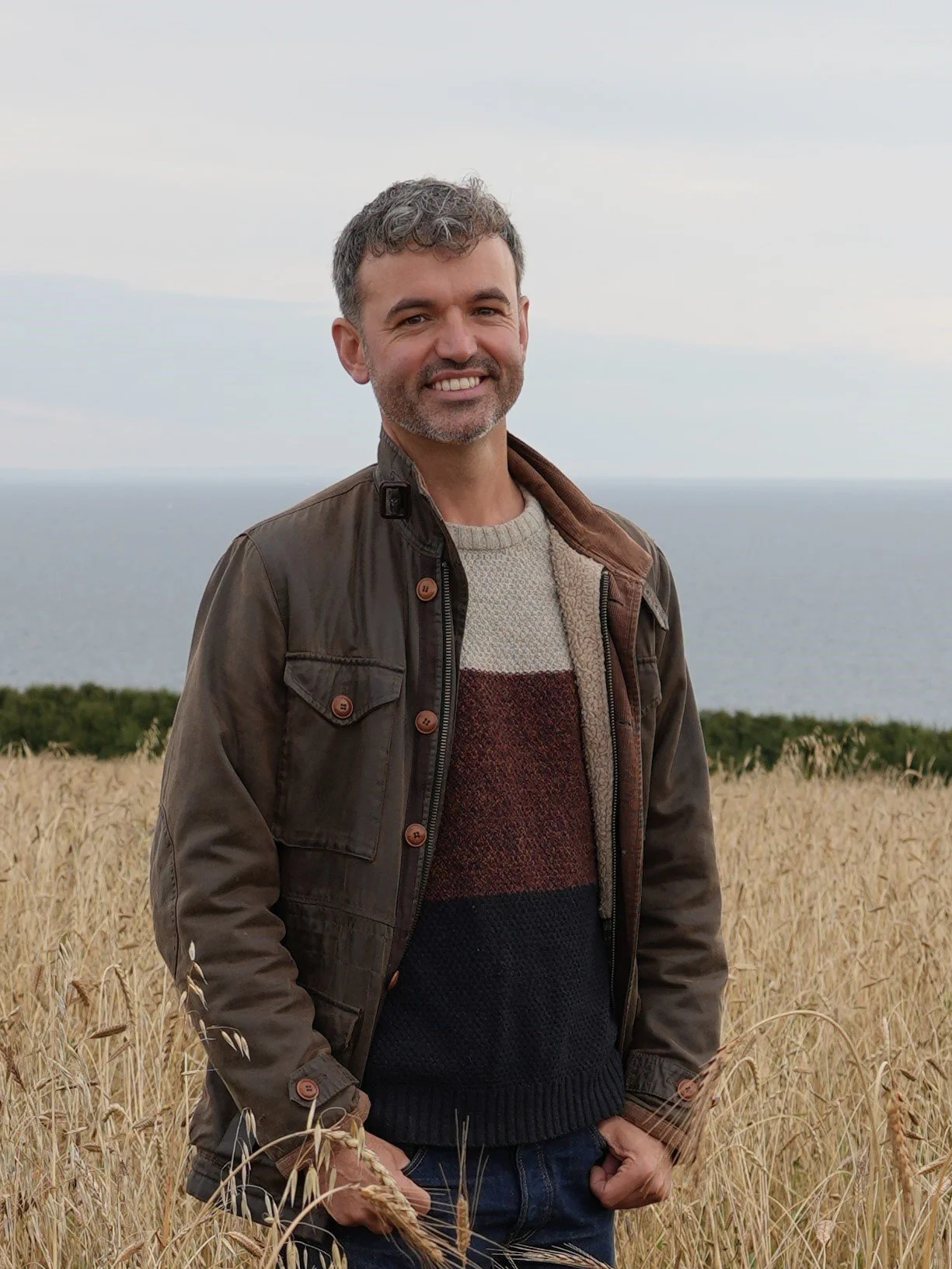
In 2025 you were awarded a Nuffield Farming Scholarship – could you tell us a bit about those Scholarships – how do they help farmers to take time out to explore new ideas?
They have been going for some decades, and were set up by Lord Nuffield of Morris cars and Nuffield tractors. They allow scholars to investigate new ideas around the world to bring back to UK agriculture, and to find future leaders in farming. The network is incredible, which makes exploring ideas less lonely. There are networks of Nuffield Farming Scholars all over the world from Australia and Japan to Europe and the USA.
Did you set out with fixed ideas about Fossil Free Farming, which you wanted to explore and test?
I am also a TV Producer, so tend to work in headlines and quite liked the idea of a Fossil Free Farm. I wanted to step back and look at a subject in detail over 2 years. So many of the issues in agriculture go back to fossil fuels – whether it is fuel itself, microplastics, single use plastics, artificial nitrogen fertiliser – agriculture has been seeking short cuts to quick results. I wanted to see if it was possible to remove fossil fuels altogether – initially I doubted that it would be.
I am looking at solutions in the form of alternative technologies, farming practices, food supply chain adaptations and funding sources to ensure that the transition is profitable.
Where did you go and what did you find? Was it what you expected, or were there surprises on the way?
Last year I went to Brazil. I met the heads of huge industry organisations, government leaders and enormous farm businesses. They are way ahead of us in so many ways. They already have biological systems fine tuned with nature. Soy is often seen as the devil, but it actually fixes all of its own nitrogen, reducing the need for artificial nitrogen fertiliser, which is by far the largest use of fossil fuels in agriculture. For 1 ton of fertiliser it takes almost 2000 litres of oil. Many farms are moving to biological pest and disease control across millions of acres across the country.
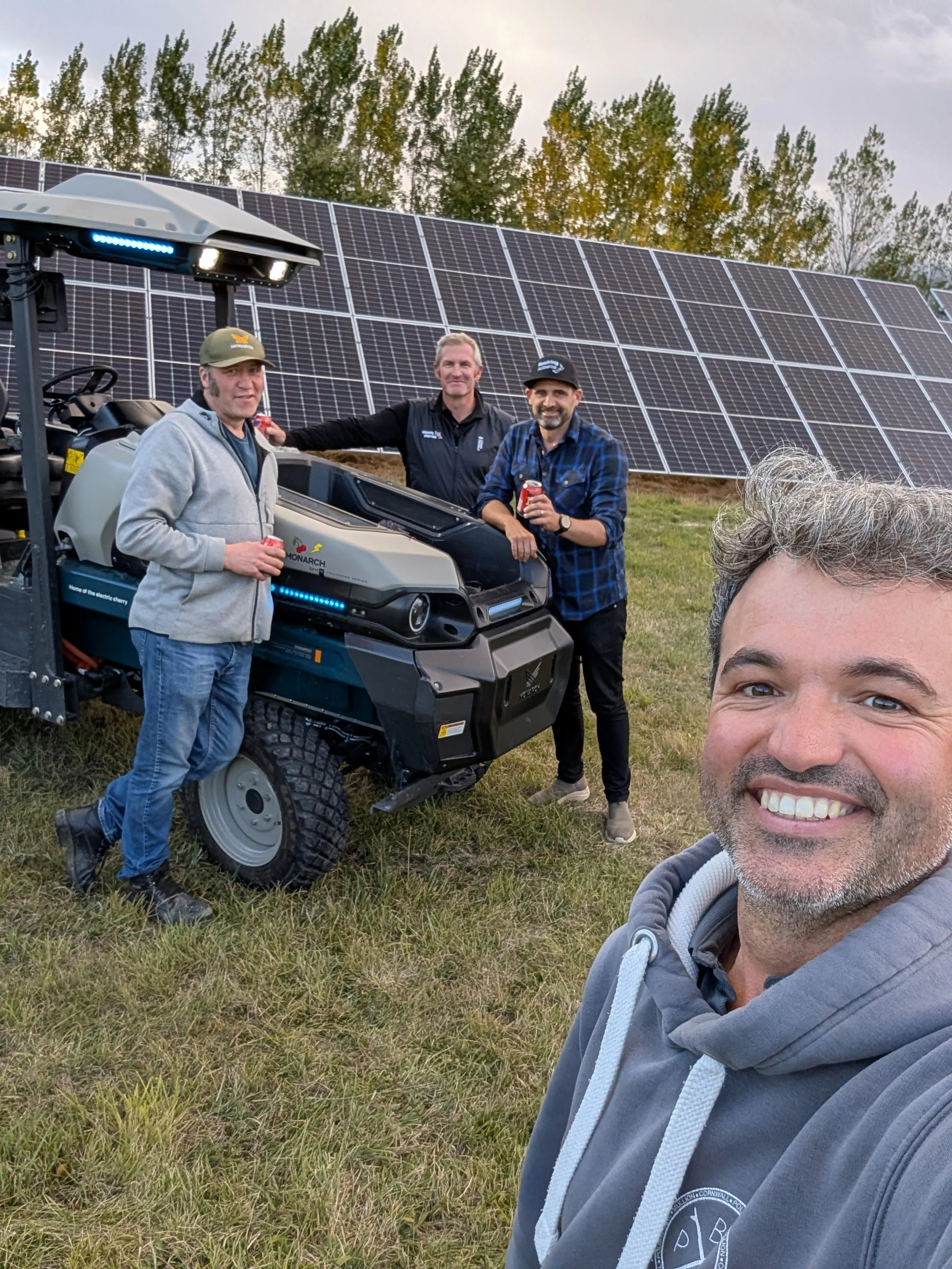
Stuart with Electric Tractor and Solar Panels
Your brother Dave has also taken on a Nuffield Farming Scholarship at the same time, but from a different angle, what did his cover? Are you going to be applying these ideas to your family farm in Cornwall?
He is looking at “stacking land uses for business and environmental sustainability” – as opposed to monocultures – multiple uses of land such as bi-cropping. (We suggested that he look at the farming expertise of the Chagga people in Tanzania, who have been doing that with coffee, bananas and other crops for some time).
For sure, there is plenty of overlap between the issues we are studying, and plenty of opportunities to apply the lessons learned to our own organic farm in Cornwall.
In your view, does the present crisis with the Iran war and blockage of the Straits of Hormuz bring any opportunities for Fossil Free Farming as well as huge economic problems? Do you think it will make us think differently about food security? Are there opportunities for U.K. farmers there too?
Food security is about being able to produce food ‘come what may’, not loads of food all of the time. That is what we need to concentrate on, and it’s not how most people farm in the UK. It is directly linked to relying on external inputs, economics, and vulnerability to the cost and availability of imported feed, imported fertiliser, imported chemicals.
The energy transition is probably the biggest opportunity for farmers in a generation. They normally own the land where renewables will need to be placed. They should be doing their own development, generating their own energy, not selling off their opportunity to external developers for what appears to be a high rent.
I’ve also been to New Zealand, Australia, Germany and Thailand so far.
The biggest realisation is that removing fossil fuels is a huge opportunity, not a burden. There is a need for rural EV charging. What about perfecting electric tractors in the U.K. before the rest of the world?
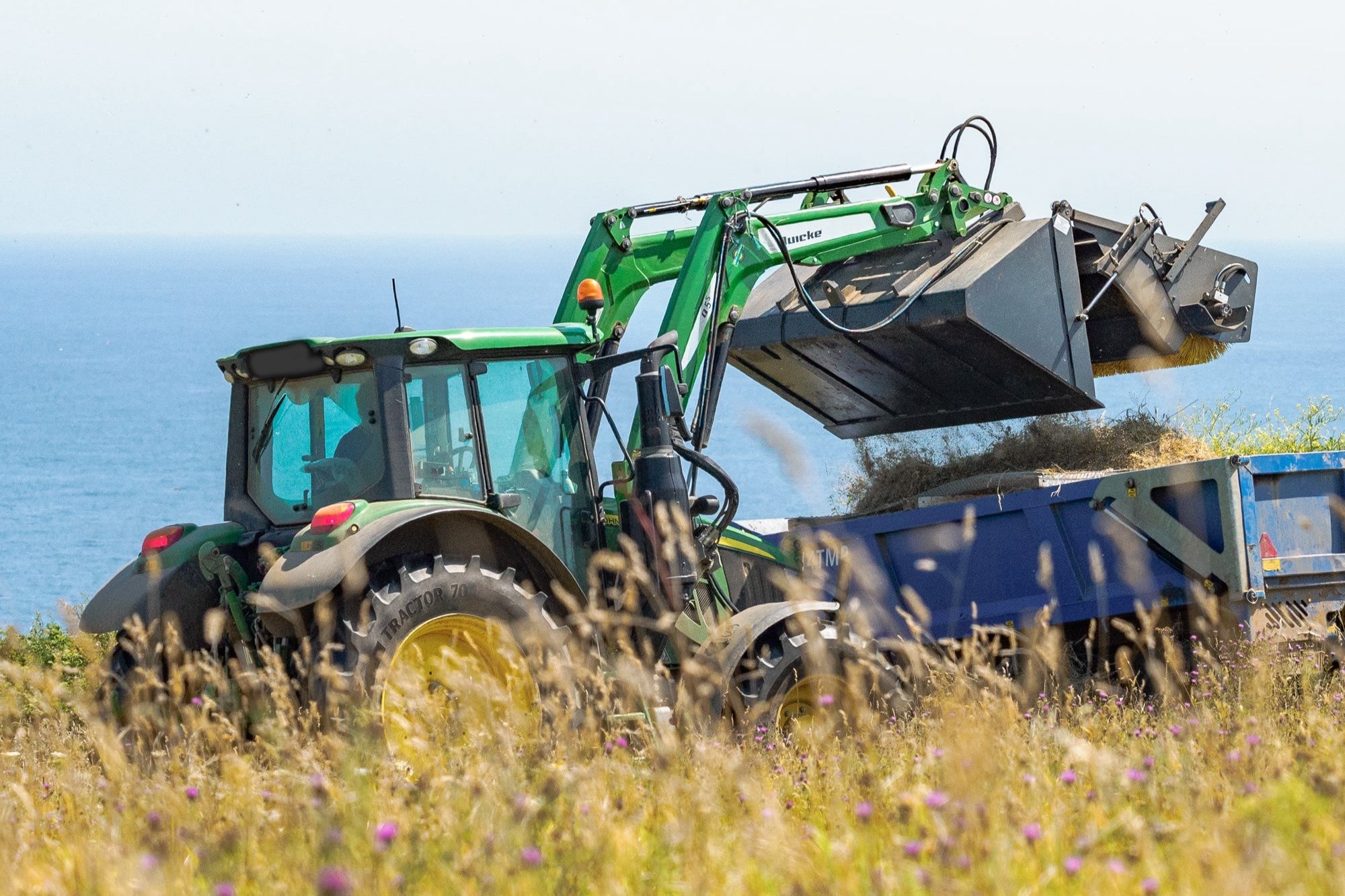
I’ve also been doing trials on replacing single use plastic on bales with twine from sisal for hay and home-brewing bio-stimulant from seaweed to replace fertilisers and increase plant resilience to disease and drought.
There are opportunities for re-breeding for nutrient-dense plants with diverse genetics, looking back at heritage grains, and wheat breeding, which has not been a win for nature. I’m currently breeding up a number of different ancient grain populations to work out what might be a good opportunity.
If you want to take other farmers with you in this approach to farming, how would you go about it?
I’ll never apologise for aiming to make money from doing good environmental work. The economic arguments are the ones which are compelling. Most farmers are not likely to make money this year due to the huge input costs due to the war in Iran.
The majority of oil is controlled by governments and regimes that show little or no concern about the impacts of its use on climate change. Our dependency on imported fossil fuels is more and more destabilising to our economy – which doesn’t help in maintaining a resilient business for another 7 generations on our farm.
But there are so many opportunities to contribute to a different way of farming while making money. Farming is a great business with huge opportunity, but as the world, the weather and the markets become more turbulent, we need to create our own stability. Having a diverse business with many income streams, relying on others as little as possible are essential.
We won’t be forgiven if we don’t ask about the camels (in Cornwall?) and the singing – are you breaking new ground in ‘farm diversification’?
So, they are Bactrian camels (with two humps) from some Bulgarian circus people. I spent my student loan on them over 20 years ago when my dad said I needed another business on the farm if it was to support us both. We used to do camel rides alongside a farm shop and café, but nowadays they are a feature of the wedding venue on the farm. But mostly, they’re just big pets.
And the singing?
Classical, rock, blues, jazz – I love to go and jam once in a while, and I sing in a band at a few farming events. I’ll be singing at the ARK organic conference in June, and at the Sustainable Food Trust event at Patrick Holden’s farm in Wales July. My brain is constantly plotting and scheming about all things work, so it’s my release. I’ve been asked to sing more professionally, but it’s the one thing which is just for me, and I want to keep it that way.