Is my heatwave hotter than yours? Does it in the end matter more, or less, or is it part of a wider picture? Or are we just conditioned to worry about the circumstances immediately in front of us, as though climate change in other areas is somehow different?
The Borrowed Earth Project are now on Substack - subscribe here to get all our blogs and newsletters:
This summer in the UK we have been struggling with what seems to us oppressive heat in a series of heatwaves or heat domes. None of our infrastructure is adapted for these conditions. Houses are not for the most part air conditioned, and one of the first clear signs that all was not well was when events at London Climate Week about the climate emergency started being cancelled because of extreme heat. Although heatwaves in the UK may not have scaled the heights of temperatures seen elsewhere, they are still predicted to have resulted in several thousand heat related deaths, and wildfires in Scotland, Wales and England.
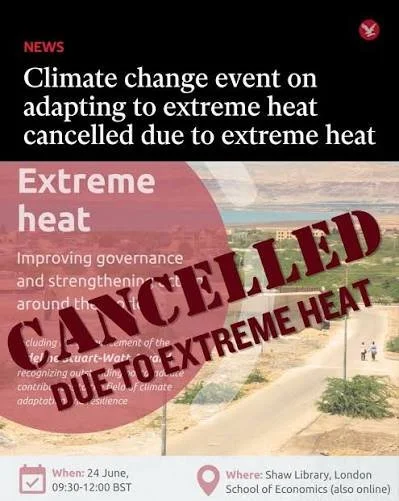
What may have seemed a one off event chimed so exactly with the report of the U.K. Climate Change Committee on adaptation ‘A Well-Adapted UK’, on which we reported previously here. This has warned that hot, dry summers, and long wetter winters were here to stay, and would have major impacts on fourteen areas of life in the UK for which governments as well as householders are ill prepared.
This has been followed by a further report from the U.K. Met Officeon 14 July 2026 with the strongest meteorological statements yet on our changing weather. The Met Office says that:
“What we used to think of as extreme, we increasingly consider as normal”
“Every year is adding to the body of evidence showing climate change in the UK. We are right now living in a time of historic and unprecedented change and in terms of temperature, on annual, seasonal, monthly and daily timescales, this evidence shows the climate of the 20th century has now gone”.
That was the statement that stood out for me. The latest 10-year period (2016-2025) is 1.33°C warmer than the period from 1961 -1990, when temperatures above 30°C were highly unusual. People of a certain age are not just hit by the present heatwaves but feel absolutely that the weather has changed significantly from the weather they experienced when growing up. The Met Office describes the warming as moving north and uphill, exactly as climate scientists have long predicted. Farmers see the dates of planting and harvesting shifting. Fishermen see the species around the coasts changing as the ones we were familiar with move north towards cooler waters. Wildfires in the Cairngorms, Wales and England used to be uncommon.
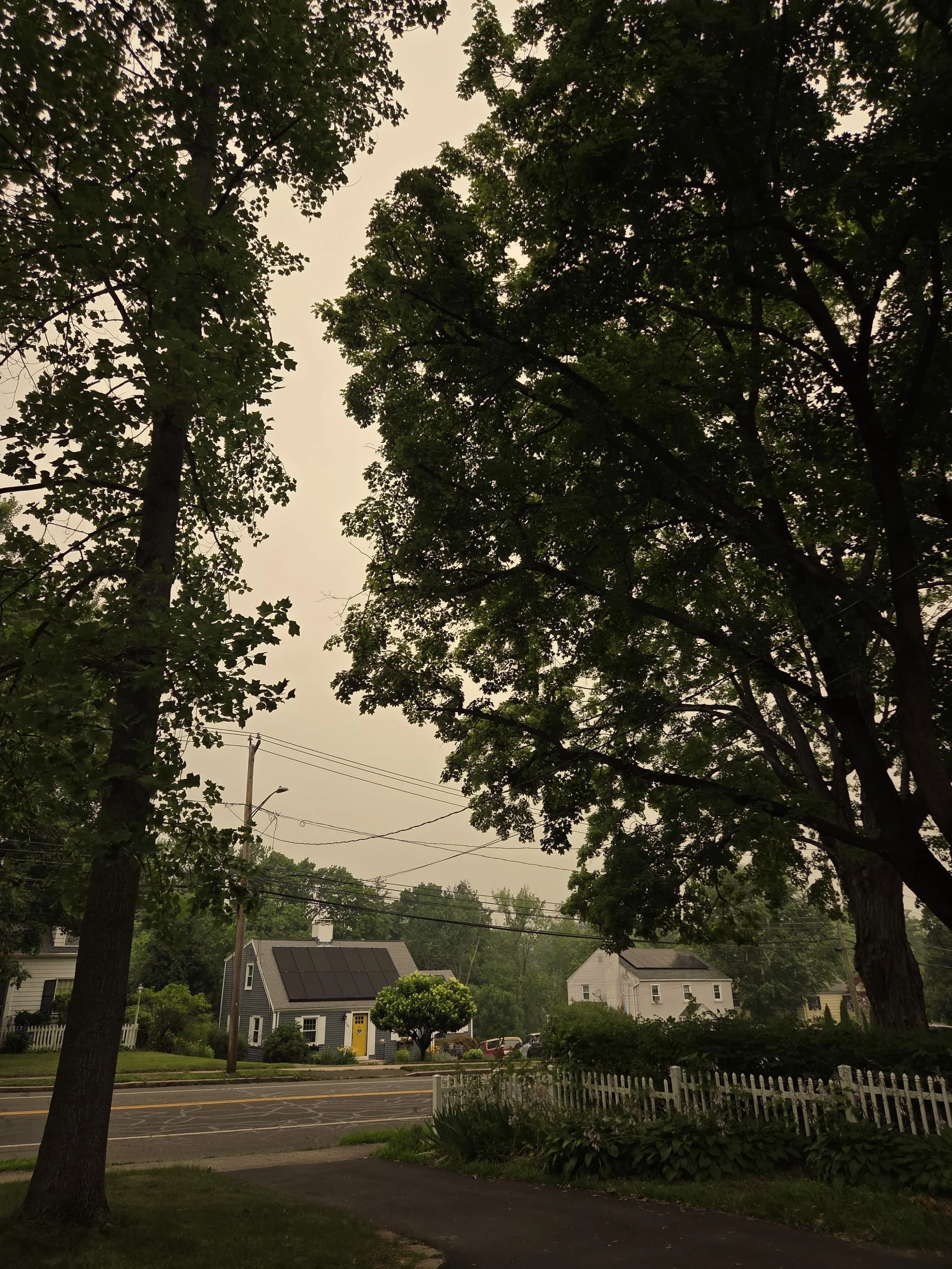
Skies over Connecticut turn orange with wildfire smoke from Canada, hundreds of miles away, no filter was used on this picture!
So there is a measurable and scientific basis for the evidence of our own senses. but if you turn from your own heatwave and drought and burned fields and increased risk of fires, in France and Spain more that 300,000 people have been evacuated as massive wildfires burn out of controland truly terrible wildfires threaten Bordeaux, Avila and Madrid. Wildfires are once again affecting the islands in Greece. At the same time, The Borrowed Earth Project’s Ed Wilson was reporting that in Connecticut, USA, the skies had turned orange and the air filled with smoke particulates from wildfires buring out of control in Canada. Climate change is no longer an abstraction or a debating point but for many it is lived experience and present danger.
In the last two weeks I have been working on The Borrowed Earth’s interviews for candidates for our Next-Gen Climate Research Fellowships in Pakistan, and the sobering aspect of that was talking to young people directly affected by prolonged heatwaves of 49°C or more, and discussing the impacts that has on young mothers, childrens’ education and opportunities, and the immediate dangers from melting glaciers in Gilgit-Baltistan. It has never felt more relevant to be part of trying to support their inspiring work and initiatives, and we will report more about that shortly.