On 22 June 2026, at the start of London Climate Action Week, Matrix Chambers and Achill Legal organised a National Emergency Briefing for Law on the Climate and Nature Crisis. We have set out below our notes from this event, but there will also be a film posted on the link above of the main speakers.
The event’s Chair was Lord Sales, Deputy President of the Supreme Court and that in itself represented important progress. Lord Sales referred to a growing set of international law cases on climate. He noted that public law and human rights law were finding ways to respond to the climate challenge. Contract and tort law and insurance law also being impacted. Climate change issues were coming to fruition now, it was not just being a problem for future generations. The issues had impacts on property, personal injuries and societal impacts. He added that ‘Acts of God’ were affecting the world increasingly frequently – but coming to be seen as ‘Acts of Man’, albeit with diffused responsibility.
After the individual talks, Lord Sales said that his takeaways were: the interconnectedness of systems and risks; the frightening nature of tipping points; the need for action now, to avoid much greater costs later; and the extent of market failure.
Kirsty Brimelow KC, Chair of the Bar Council of England and Wales for 2026 said that she had made Climate and Nature a key priority for her term as Chair of the Bar – which represents further progress in itself.
Kirsty Brimelow saw Climate and Nature as an existential crisis, for us and for future generations. She said that lawyers do not just interpret the law but shape how it develops. Climate and Nature affect regulation, corporate risk, and, on her estimate, 23 legal sectors. To lead and advise competently, all lawyers need to become climate literate. The Briefing was a chance to learn from 7 experts. The Finch case was a reminder that education of public does not guarantee promotion of environmental protection, but in the end you can only care about what you know about.
She quoted British Polar Explorer Robert Swan -
“The greatest threat to our planet is the belief that someone else will save it.”
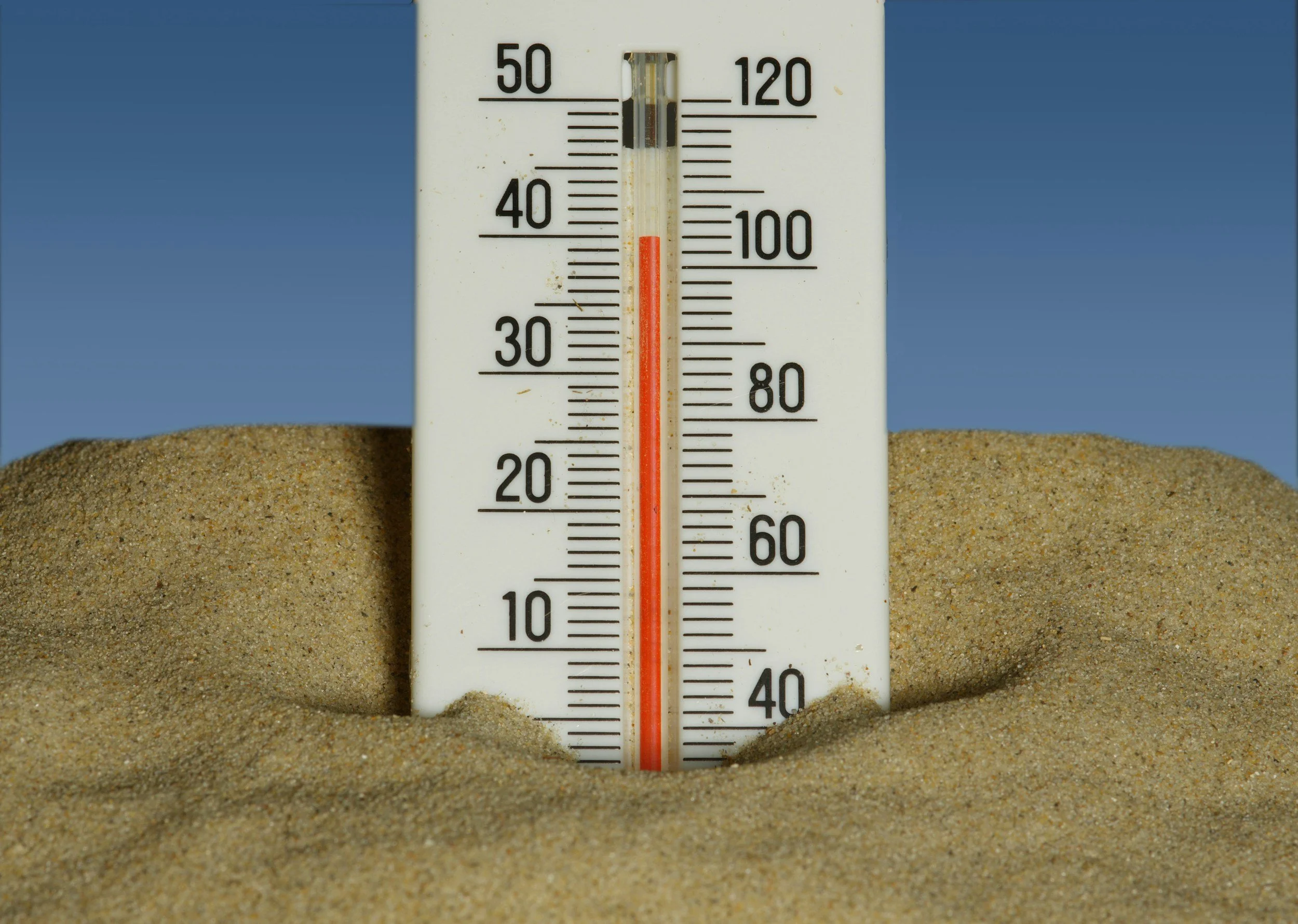
Andrew Masraf, Senior Partner, Pinsent Masons LLP welcomed delegates to London Climate Action Week, as temperatures exceeded the high 30°C’s.
He spoke of the need to bring climate considerations into client advice, but also noted the fractured political consensus, which former Prime Minister Theresa May had described as the tension between policy and politics.
Prof Paul Behrens British Academy Global Professor at the Oxford Martin School, University of Oxford spoke about the impacts of the climate crisis on global and local food supply, which he described as a threat to everyone in the room, every family.
He said that for generations, a stable climate gave us stable harvests – that was no longer the case. It was particularly damaging when climate extremes hit several corn growing areas simultaneously.
By the end of the century we could lose one third of available growing land.
We underestimate interconnected risks. About a quarter of UK food is imported from Mediterranean. More that one third of food price inflation is caused by climate changes. Food is now a national security issue. The UK does not have the land to feed itself and to rear livestock. Professor Behrens said that Britain’s food supply at risk of catastrophic failure by 2030.
He argued that a great food transformation is needed – with a shift to plant rich diet. He said that if we don’t lead the change, food shocks will force it on us anyway. We could carry on as we are, and watch the system buckle, or act now to anticipate and head off the worst effects.
Prof Hayley Fowler, Professor of Climate Change Impacts at Newcastle University and holder of the Royal Society Faraday Discovery Fellowship spoke on the weather, and the impacts of expected weather extremes.
Professor Fowler instanced Storm Boris, and the Central and Eastern Europe Floods of September 2024.
She remarked that the media were bored with extreme weather and scarcely reported it any more.
She referred to slow moving storms and heatwaves, cut off from the Jetstream, with record breaking floods worldwide in 2025 – and a chart taken from an article with Willetts Re-insurance which showed that collectively, smaller storms led to the greatest losses to insurance market. Professor Fowler that that the US National Oceanographic and Atmospheric Administration, ‘NOAA’ had prepared a chart showing $billion weather disasters by decade, but the NOAA was currently not allowed by the Trump Administration to update the chart. She said that the last 3 years were the hottest on record – as the world rapidly approached 2oC of warming – it is currently at 1.4oC - 1.5oC of warming.
Professor Fowler noted the Red weather warning in the UK this week, of temperatures up to 40oC, like 2022. Heatwaves and wildfires and restrictions in water supply would become more frequent. Climate models were not keeping up - 30mm extra winter rainfall across the UK was happening now, not in 2040.
The UK Climate ChangeCommittee report ‘A Well-Adapted UK’ showed that we know what to do, we just need to do it now, which would be cheaper than delaying.
Tessa Khan, Executive Director of Uplift and Co-Director of the Climate Litigation Network discussed the energy transition. She noted the price of energy driving inflation and increases in the cost of living.
The Iran Crisis had had disastrous impacts on the costs and availability of fertiliser and food. The Russian invasion of Ukraine had led directly to fossil fuel price shocks and UK government spending of billions of pounds. She argued that and energy system based on renewables has countless obvious advantages.
Offshore wind, solar, and battery prices were far more competitive. She talked about upgrading grid, changing to heat pumps – and noted advice from the UK Climate Change Committee that the total cost of getting to net zero is less than the cost of one more major oil shock.
Clean energy jobs had huge potential – the CBI said that already there were more than a million of them. She ended by saying that every transaction, contract comes into being with the support of lawyers – they need to challenge transactions which keep us using fossil fuels.
Prof Tim Lenton Chair in Climate Change and Earth System Science at the University of Exeter spoke about tipping points.
He drew on his world-renowned work identifying climate tipping points, which informed the setting of the “well below 2°C” climate target. The warmer the world, the higher the risk of crossing tipping points.
Recently he has highlighted the opportunities for positive tipping points, to accelerate social change towards net zero greenhouse gas emissions and global sustainability. Professor Lenton noted that damping feedbacks are getting weaker – there was more risk from tipping points. He mentioned 80% of coral reefs in the tropics dying back; and critical threats to the Amazon Rainforest.
But he focussed in on the Atlantic Circulation slowdown since 1960s. The Atlantic Meriodional Overturning Circulation had turned on and off 25 times in last ice age cycle. As Gulf Stream gets less dense and no longer sinks, it would turn right and go past Spain. T
he world was currently steaming towards 2.0oC. Under a scenario of a weakening AMOC, summers in UK would get radically more extreme – as hot or hotter than now – while winters unwarmed by the Gulf Stream could result in winter temperatures in London of -20oC, in Edinburgh of -30oC -in winter. This would wipe out agriculture and make the UK less habitable.
The window was rapidly closing on mankind’s ability to alter the outcome.
A positive tipping point might be more rapid uptake of solar, wind, EVs. The UK had already passed a tipping point for the power sector, replacing coal with wind and solar. The only way to limit the risks from negative climate tipping points would be to retrieve the overshoot of 1.5oC which was due to take place on global temperatures.
Prof Nathalie Seddon, Founding Director of the Nature-based Solutions Initiative and The Agile Initiative at the University of Oxford spoke about biodiversity.
Professor Seddon argued that nature is not separate from human life: human health, food, clean water are eroded in one of the most nature depleted countries in the world. Only 14% of rivers in England are in ‘good ecological status’. The Office for Environmental Protection had repeatedly warned that the government is off track from meeting its legally binding targets on environmental protection. Biodiversity underpins pollination, water purity; nature loss is a material and forseeable risk. We have an economy undermining its own foundations. This has implications across public authorities, planning, governance, disclosure, finance, insurance and supply chains. We needed to stop subsidising pollution and invest in systems that support nature. Failing to act would be a betrayal of future generations.
Lt General Richard Nugee CB CVO CBE a former senior British Army officer with a 35-year military career included operational tours in Northern Ireland, the Balkans, Iraq, and Afghanistan, where he served as Chief of Staff to NATO’s ISAF Joint Command, spoke about the climate and nature crisis as a national security issue.
General Nugee noted that NATO Article 3 addresses the full spectrum of threats, and requires that military capabilities be supported by robust civil preparedness. He noted that in a hotter world and with global warming threatening water supplies there were threats to the international rule of law and these were more likely to result in conflict.
Ido Eisenberg, Head of Responsible Investment, Quilter Investors discussed the failure of measurement, whereby financial markets and current charts markedly underestimate the actual costs of a changing climate.
He demonstrated this by showing a recent chart from a typical market briefing which had Total portfolio damage of a 3oC world as a 2% loss – less than net zero! He thought this is totally misleading. He argued that there is a systemic underrepresentation of risk. Asset owners, Asset Managers, and Corporates are too short term, and will not address emissions and waste if they don’t have to. This meant that responsibility shifted to policy makers, regulators and the law. There was a need for re-framed fiduciary duties, and for externalities to be made contractual
He gave the examples of Boko Haram and the Taliban paying farmers to join them when farmers’ subsistence had been eroded by a changing climate. He spoke of tensions between Egypt and Ethiopia over the filling of the GERD dam on the Nile. Arctic ice melting made the Arctic a flashpoint, with the Russian Duma declaring the Arctic an ‘internal water’.
Closer to home, General Nugee referred to cascading crises, infrastructure damage, flooding, risks of food insecurity, houses that flood being unsaleable and insurance costs soaring.
His argument was that climate and nature crises were part of a picture of national resilience and preparedness, and that courage was needed to stand out from the consensus.