
Oil shocks and the price of addiction to fossil fuels
The first casualties of wars are the people directly affected; the killed, the wounded and the displaced.
Without diminishing that in any way, this article considers some of the impacts of past and present oil shocks on the world’s addiction to fossil fuels, and whether this can finally be a turning point in the energy transition.
The oil shock of 1973 was brought about by a combined cutback in OPEC nations’ oil production accompanied by a concerted oil export embargo, led by Saudi Arabia. The consequences were profound and long lasting. For a time, oil prices quadrupled. It led to serious questioning, in the USA and many other countries, about the extent of their reliance on imported fossil fuels, the start of real investigation of alternative fuel strategies, 55 m.p.h speed limits on the vast roads across America, and a whole ‘economy of economy’ around fuel efficiency. Some visitors to the USA in the years after the oil shock remarked that the whole shape of cars outside the airport had changed, from the long ‘gas guzzlers’ of the 1960s to the more compact fuel economy versions that made more sense at the time.
The impacts of a new oil shock today may be much more unevenly distributed around the world. America has become a major oil and gas producer – the world’s largest - through shale production, and the current administration’s policy is to roll back every sort of regulation that would limit fossil fuel production and use, and put an end to all regulation of greenhouse gas emissions or efforts to contain contributions to climate change. The present US administration is going to pay France’s Total Energies $1 billion to abandon its construction of offshore wind farms on the US East Coast and invest instead in fossil fuel production.
America may be insured against the immediate oil and gas shortages that will afflict other parts of the world, but worldwide economic disruption will affect all economies. The World Economic Forum has identified just some of the geo-economic impacts of the current war in the Middle East in this article, which describes impacts radiating out, from oil and gas, to helium for semiconductors, fertiliser for food production, re-routed flights and transport, and supply chain disruption.
The report from the IEA ‘Sheltering from Oil Shocks’ is a reminder of the sort of measures that countries may need to resort to.
But ironically, while sky high oil and gas prices in the rest of the world may in the short term cause economic devastation, they could also result in the medium term to new levels of determination to achieve energy self sufficiency and resilience against this form of oil shock, with the difference this time around being readily available and cheaper renewable energy.
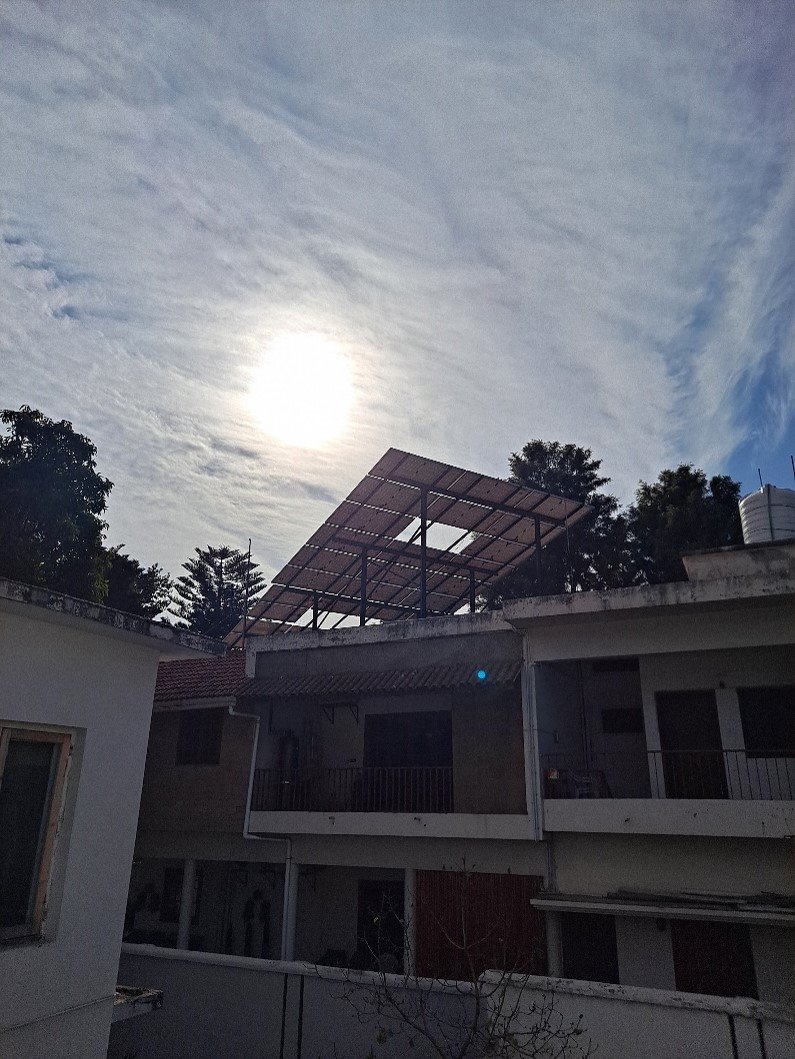
Solar panels are proliferating across Pakistan’s rooftops
Pakistan is massively affected by the most recent oil price rises, and as a direct consequence of the oil price rise from the Middle East war was already in March 2026 on a four day week, with schools and universities closed. Yet, as we discussed in an earlier article, Pakistan has also undergone an off-grid revolution in the installation of solar power, which gives it one layer of protection and resilience against worldwide disruption in fossil fuel markets. Could other countries follow that lead, for example by encouraging new developments of houses to be energy self sufficient, so as to promote greater resilience against energy price increases and demand?
Short term winners from huge oil price increases, such as Russia benefitting from an extra $150 million a day, which it can put towards its current project of attacking neighbouring countries, may find that in the medium to longer term this has redoubled their customers’ determination to be rid of their addiction to fossil fuel use. Following Russia’s invasion of Ukraine in 2022, the EU has taken steps – incomplete, but structural and long term steps - to reduce its dependence on Russia’s oil, gas and nuclear power.
It is therefore ironic that the EU’s plans to reduce its reliance on Russian gas have led to its increasing reliance on supplies of Liquified Natural Gas (LNG) from the USA, and from Qatar, via the Straits of Hormuz.
In the UK the independent Climate Change Committee (CCC) has released a new report to complement its 2025 advice on the UK’s Seventh Carbon Budget. This report found that the total additional cost of a single fossil fuel price spike of 2022 magnitude is likely to be as large as the total net additional cost of meeting the pathway to Net Zero across every year to 2050.
Nigel Topping CMG, Chair of the Climate Change Committee, was quoted as saying:
“In light of current world events, it’s more important than ever for the UK to move away from being reliant on volatile foreign fossil fuels, to clean, domestic, less wasteful energy.”
The Oxford University Smith School published in March 2026 a rapid analysis of the comparative costs for the UK of maximising the depleting supplies of oil and gas in the North Sea, and using that to help keep household energy costs down: as against building up renewable energy and promoting the electrification of British households.
The Oxford Study reported that:
“This rapid analysis examines how different government policies could reduce household energy bills . We find that the exploitation of all remaining North Sea Oil and Gas resources yields substantially smaller annual savings to households than switching to renewable energy – around 5 - 7 times lower . The analysis finds estimated annual savings of ~£16 - £82 per household from North Sea fiscal revenues versus ~£105- £441 per household under renewables - led energy and electrification. Using the median dual-fuel household energy bill of £1,776 (Ofgem January 2026 Price Cap), North Sea fiscal transfers could reduce bills by ~1 - 5%, whereas the renewables - led savings range from~6 - 25%.”
The Oxford Smith School rapid analysis is therefore saying that it would cost less, and confer greater economic benefits to households to switch to renewable energy than to exploit the remaining reserves of oil and gas in the North Sea.
The Climate Change Committee report finds that the cost of a major oil shock such as that caused by Russia’s invasion of Ukraine in 2022 is greater than the whole cost of a transition to Net Zero by 2050. Fatih Birol of the IEA has already said that the current scale of the present oil shock is greater than those of the 1970s and the oil shock of 2022.