
COP 30 Belém - An Overview
It takes a bit of time to try and process the outcomes of a climate COP, and to listen to the reports and assessments of those who were there and closer to the negotiations.
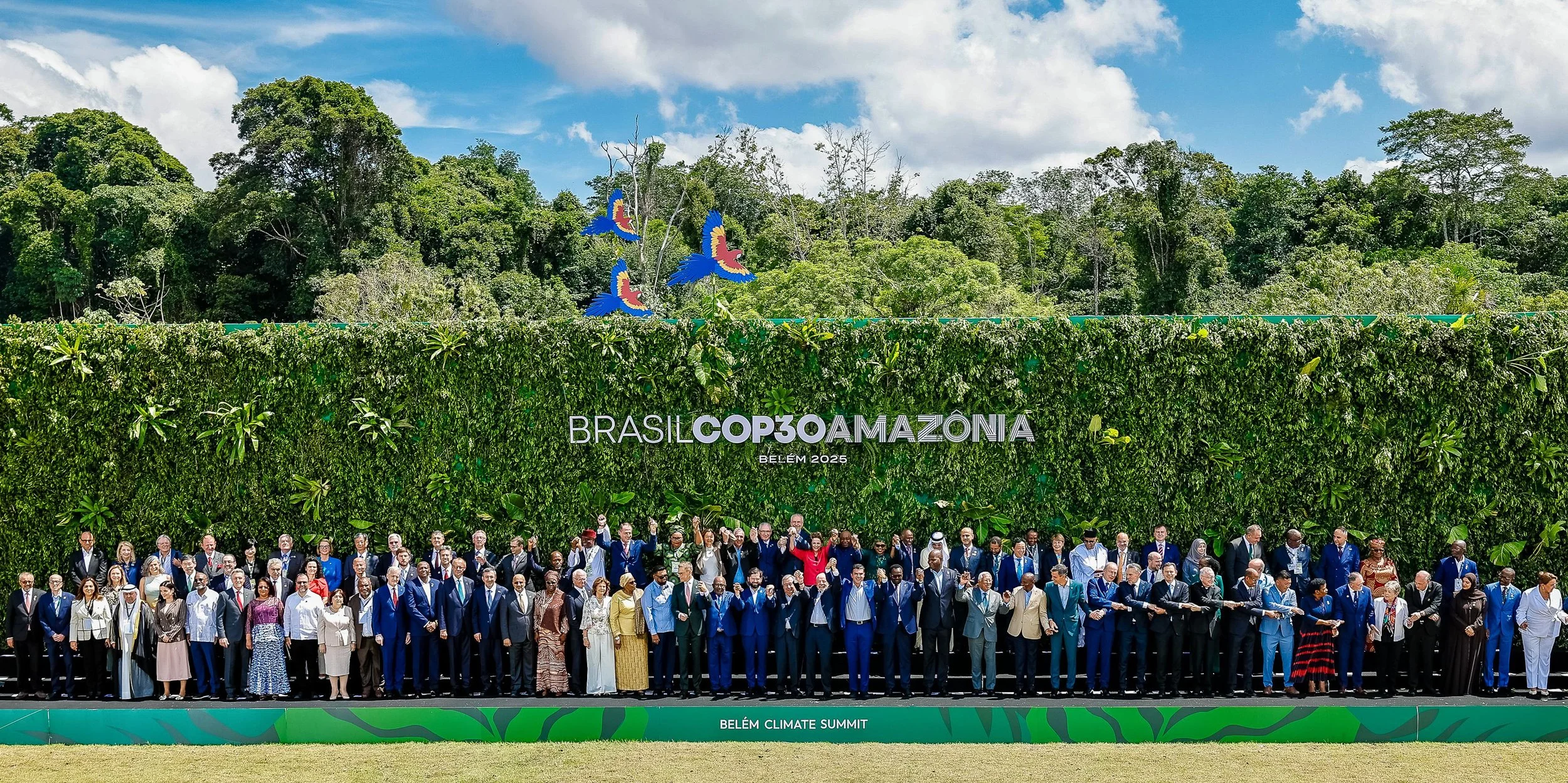
This is our attempt to summarise where COP30 has left climate talks, following our mini-series of blogs during the COP on; Implementation, Citites, South Korea’s Coal Phaseout, and Fossil Fuels.
For a really comprehensive account for each issue, we would recommend:
Carbon Brief’s full account of key outcomes
Outrage and Optimism’s whole podcast series, but perhaps particularly this episode
Geopolitics
Geopolitics is in a fraught state, with little of the worldwide collaboration that was in evidence at COP15 in Paris or even COP26 in Glasgow.
In particular, the USA under the Trump administration has opted to leave the Paris Agreement once again, and is in process of dismantling as much of its leading world-leading scientific expertise on climate as is within the administration’s long reach. It is doing everything that it can to promote the use of coal and fossil fuels while promoting one policy after another to stymie the uptake of renewable energy and the energy transition. See, for example, the Sabin Centre’s Climate Bactracker and its Silencing Science Tracker.
However, as we will note below, this does not appear to be slowing the economic drivers in the rest of the world, which is taking its own decisions and implementing its own policies. To a greater extent than before, it seems as though the rest of the world is not waiting for the USA to stop wasting time and get back to using its power and its knowledge to contributing to climate solutions.
The absence of a US formal delegation at Bélem probably emboldened fossil fuel producing countries, but in fact they were fairly intransigent already, and the talks showed the lack of a real worldwide political consensus on real climate action at the present, with about 80 countries supporting climate ambition and a way out of fossil fuel dependence, and about 80 holding back.
The outcome of the talks showed the idea of multilateralism holding on, still working somehow despite everything, and this was a better outcome than the sabotaging of talks on the Plastics Treaty by petro states and oil lobbyists and international shipping emissions by the US.
On balance, we at The Borrowed Earth Project are of the ‘glass half full’ attitude towards climate talks that are still functioning, because, frustrating as the slow rate of progress may be when outcomes depend on there being a consensus, there is not yet a better alternative to this COP framework.
Formal Outcomes
The final documents from the Bélem talks contained no mention of fossil fuels, and there were no formal Roadmaps on an energy transition away from fossil fuels and halting deforestation, both of those topics being reduced to unilateral Presidency initiatives to be taken forward after Bélem.
Agribusiness, discussed in a venue close to the COP talks, appears to have contributed to there being little or nothing in the final texts about food production systems, and less progress on deforestation than you might hope, from talks taking place in the middle of Amazonia.
On these key topics, it is a bit like going to hospital and not being able to mention the cause of a disease or an injury.
Economics of the energy transition
The economics of the energy transition present a much different picture to the geopolitics. The USA may have been missing from Bélem, but China sent a huge delegation, and multiple observers noted that rather than spending most of its time on filling the political vacuum left by America, China had its head down concluding trade deals and commercial agreements.
In his remarkable book Breakneck, Dan Wang explains China’s mastery of process engineering and production capacity, sometimes wasteful, and often highly competitive, and capable of driving down the price of key technologies for the energy transition, including wind, solar and electric vehicles. As it drives towards its own energy independence, China was still in 2023 60.9% reliant for its total energy supply on coal (up 268% between 200 and 2023), but renewables formed a 30.2% share of its electricity generation (up 82% 2000-2023).
China’s economic production is causing the price of solar to tumble, leading to widespread non-government adoption in countries such as Pakistan (see our article on the Solar Revolution in Pakistan and the availability of cheap EV vehicles is transforming many countries in the global South (one of our authors noted that taxis in Nepal were electric vehicles from China).
It really seems as though the energy transition has turned a corner, and is proceeding independently of the lack of geopolitical cooperation, mainly on economic grounds as renewables have become cheaper to install in many countries than fossil fuels. One report in 2025 claimed that 91% of new renewable projects were now cheaper than fossil fuel alternatives.
Reasons for staying the course
Despite the maddeningly slow rate of progress in the main talks at Bélem, we see some reasons to note real progress while pressing for more.
First, there is still progress being made at both City and sub-national level, as we reported in a separate post.
Secondly, the progress being reported by the UNFCCC Secretariat of the development of countries’ Nationally Determined Contributions and National Adaptation Plans, although much slower than is needed, is nevertheless real, as we reported in our initial article from COP30 on Implementation.
Thirdly, and as noted above, lack of progress in the geopolitical field appears to be becoming separated from economic drivers towards an energy transition.
Fourthly, and sadly, the weather and climate change are happening so fast, they will in all likelihood become so very obvious and will impact so many millions of people that political opinion will change. We find it worthwhile keeping track of reported meteorological data from the WMO and on tipping points from the Potsdam Institute.
Fifthly, geopolitics goes in cycles and does not always remain in its current decidedly unpromising state: it can take years of persistent and careful work to make progress, as we are reminded in the posthumous memoir The Climate Diplomat from the UK’s and EU’s lead negotiator Pete Betts.
Issues that we want to take account of going forward after COP30 include:
Fossil fuel subsidies – said by the IMF to have reached $7 trillion in 2023, of 7.1% of GDP;
Attribution science , which may hold the key to being able to attribute measurable amounts of climate change to individual sources of emissions, and individual companies;
Energy prices for consumers, and factors that are keeping them high, given that this is where much of the public is impacted and which drives the politics;
After Net Zero – the economic impacts of being independent of all future fossil fuel imports, and why that is less discussed than whether or not we should aim for Net Zero in the first place.